
Custom Police Velcro Patches
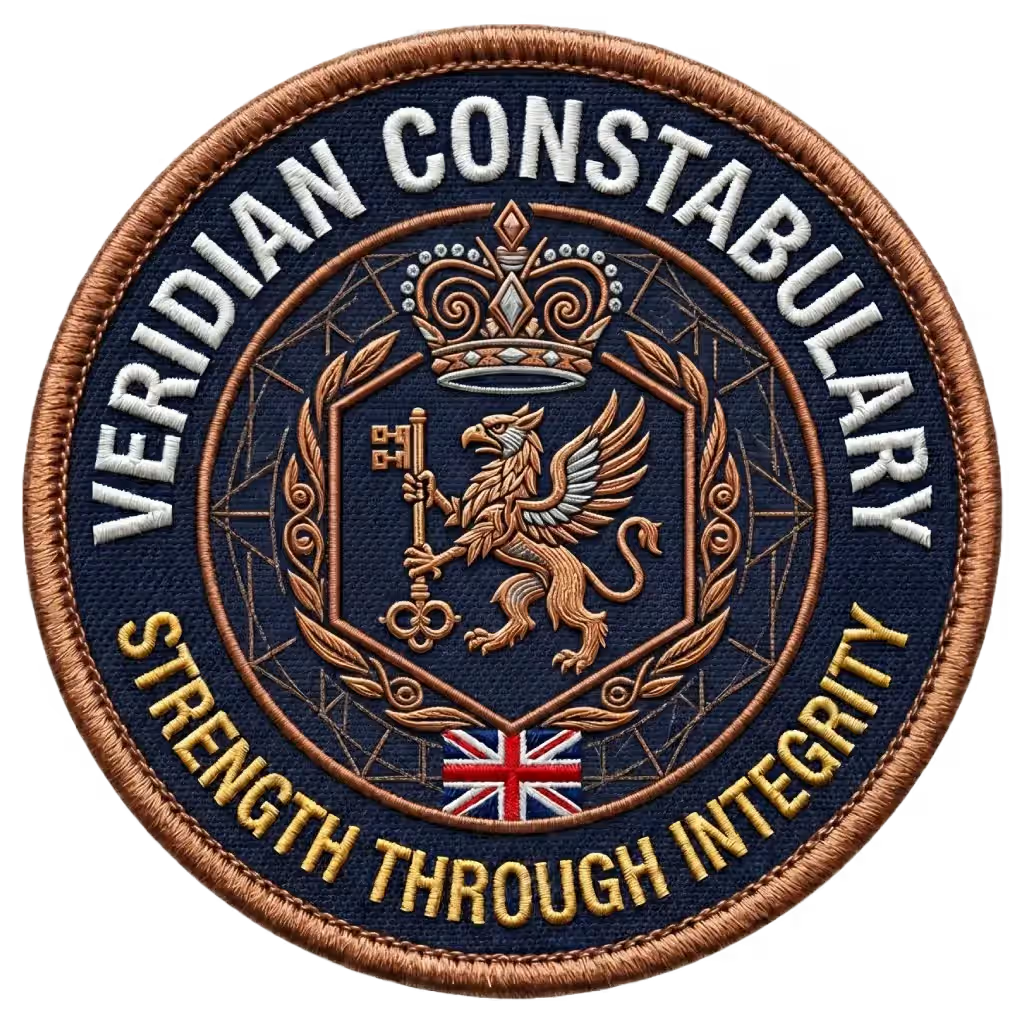
Custom police Velcro patches are hook-and-loop backed identification badges that attach to police uniforms, tactical vests and plate carriers without sewing. UK officers, security firms and enforcement teams order these bespoke patches to display collar numbers, ID tags, force-appropriate insignia and rig panels that can be removed, repositioned and swapped between garments. Each patch combines a custom-designed front, embroidered, PVC or printed, with a hook-and-loop backing that grips a matching Velcro field already fitted to operational kit.
What Are Custom Police Velcro Patches?
Police Velcro patches are fabric or rubber badges that use a hook-and-loop fastening system instead of stitching or adhesive. The hook side carries stiff plastic loops, and the loop side carries soft fibres; when pressed together, the two sides bond firmly yet release on demand. A police patch attaches to the loop field sewn onto a uniform, body-armour carrier or tactical vest, which means the wearer mounts and dismounts the badge in seconds.
Custom police patches differ from generic patches in three measured ways. The artwork follows force, security or unit branding rather than decorative themes. The construction meets operational wear standards, because patches endure friction, weather and repeated removal. The backing is almost always hook-and-loop, because law-enforcement and security roles demand removable identification rather than permanent stitching.
Velcro is a brand name, and hook-and-loop is the generic term that describes the same fastening method. UK suppliers, police forces and security buyers use both words interchangeably, so this page treats "Velcro patch" and "hook-and-loop patch" as the same product. Our hook-and-loop patches guide explains the trademark distinction and the backing mechanics in full detail.
Who Uses Police-Style Velcro Patches in the UK
Police-style Velcro patches serve several distinct user groups across the UK, and each group orders for a specific operational reason. The buyer determines the design rules, the legal boundaries and the patch type, so identifying the user clarifies every later decision about backing, size and wording.
Serving Officers & Police Staff
Serving officers order Velcro patches to display collar numbers, shoulder numbers and role identifiers on uniforms and plate carriers. A collar number patch identifies the individual officer, and a force or department patch identifies the unit. Officers prefer hook-and-loop backing because shift kit, body armour and high-visibility layers change frequently, so a removable patch transfers between garments without re-stitching. Police staff and civilian support roles use the same removable system for ID tags and name patches.
Private Security & Event Security Firms
Security firms order police-style Velcro patches to brand uniforms, hi-vis vests and tactical carriers for door supervisors, event stewards and CCTV operators. Security companies use custom patches that clearly distinguish their staff from sworn officers, because the design must signal "security" rather than imitate a genuine police force. Reflective ID patches, company-name panels and SIA-relevant role markers form the bulk of security demand, and these patches mount onto the same Velcro fields used across the wider police and security services range.
Enforcement, Training & Cadet Organisations
Enforcement officers, training providers and cadet units order Velcro patches to mark rank, role and organisation on operational and instructional kit. Local-authority enforcement teams, close-protection trainers and police cadet groups all need removable identification that adapts to changing personnel and exercises. Cadet organisations in particular rotate patches between trainees, so hook-and-loop backing reduces cost and waste. Each of these groups uses police-style branding that remains legally distinct from official force insignia, a distinction this guide addresses in full further down.
Types of Custom Police Velcro Patches
Custom police Velcro patches divide into five core types, and each type answers a specific identification need. The list below maps the patch to its operational purpose, so the buyer matches the product to the role before choosing construction and size.
- Collar Number & ID Number Patches - small rectangular patches displaying an officer's collar number or staff ID, sized to fit standard uniform Velcro fields.
- Shoulder / Epaulette Patches - patches that mount on the shoulder or epaulette to show force, rank or role identifiers.
- Plate Carrier & Rig Patches - large panels, commonly around 220 × 100mm, that brand the front or rear of body-armour carriers and tactical rigs.
- Reflective Hi-Vis ID Patches - printed reflective patches that improve night-time visibility in low-light conditions.
- Morale Patches - unit, team and novelty patches that build identity and esprit de corps within a force or security team.
Collar Number & ID Number Patches
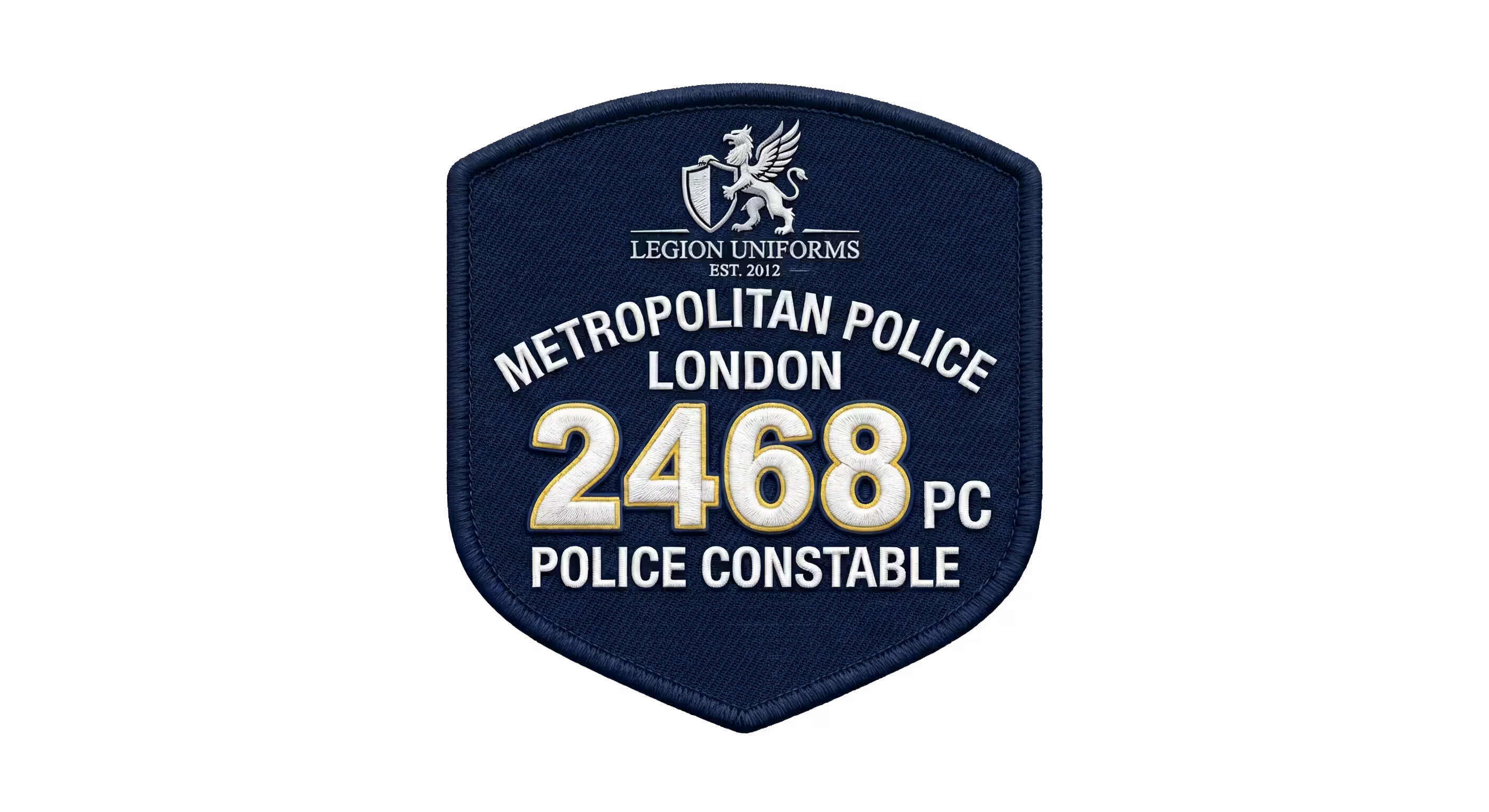
Collar number patches display an officer's individual identification number in clear, regulation-style lettering on a hook-and-loop backed panel. The collar number identifies the wearer, and the patch size matches the uniform's Velcro field, typically between 50mm and 120mm wide. ID number patches extend the same format to police staff, PCSOs and approved support roles. These patches are the highest-demand police Velcro product in the UK, because every operational officer needs a removable, swappable number that transfers across shirts, jackets and carriers.
Shoulder / Epaulette Patches
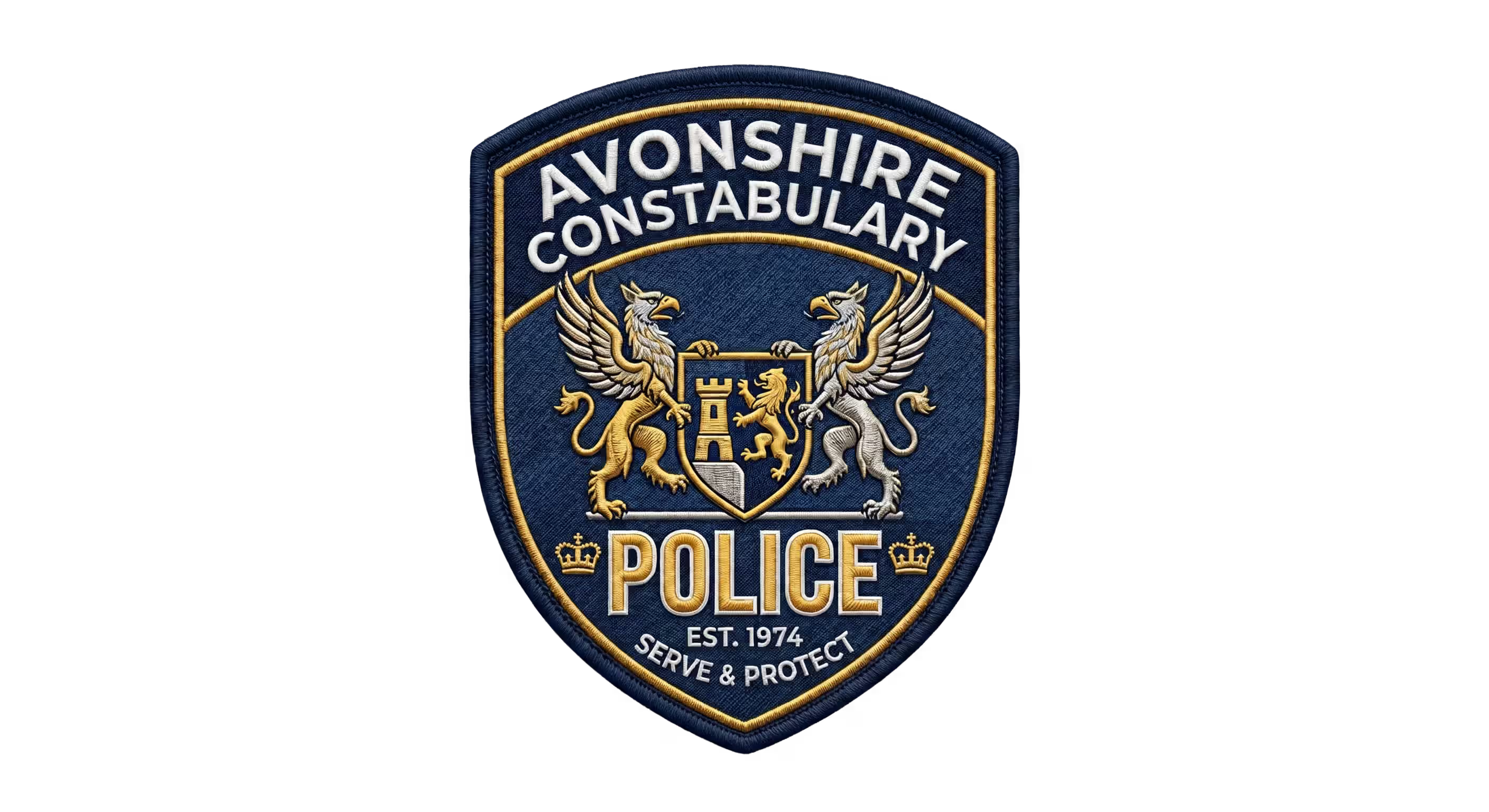
Shoulder patches mount on the upper arm or epaulette to communicate force, division or rank. A shoulder patch carries the organisation identifier, and the Velcro backing lets the wearer reposition it as kit changes. Epaulette slides and shoulder panels often pair with collar number patches to form a complete identification set on a single uniform.
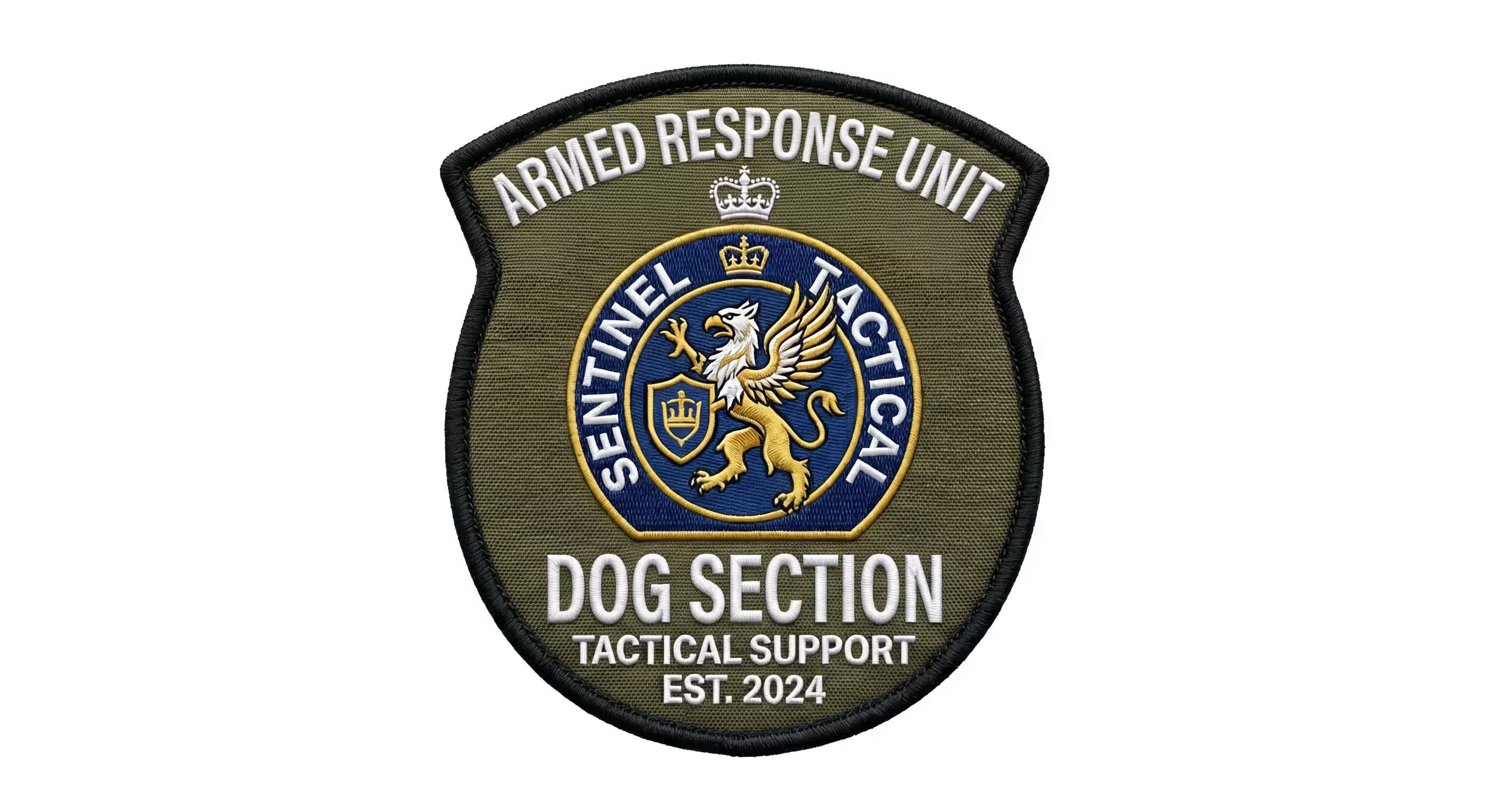
Plate Carrier & Rig Patches
Plate carrier patches are large hook-and-loop panels that brand the front, back or side of body-armour carriers and tactical rigs. A rig patch measures up to 220 × 100mm, and the large surface area carries high-visibility text such as "POLICE", "SECURITY" or a unit name. Plate carrier patches sit on the loop fields built into modern tactical vests, so officers and security operators attach, remove and replace them without tools. The PVC version of this patch resists water and abrasion, which suits outdoor and high-contact deployments, explored further in our PVC patches range.
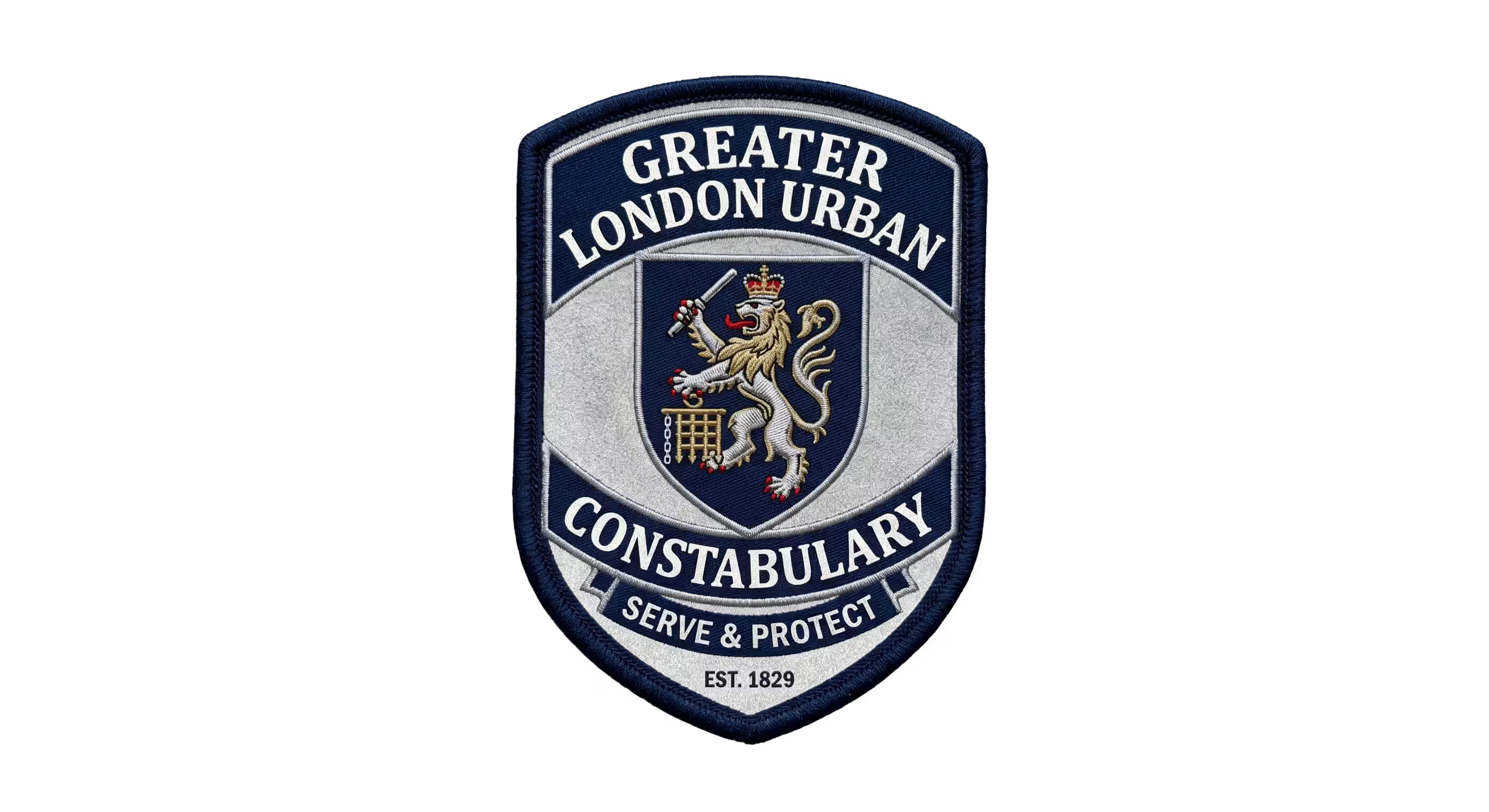
Reflective Hi-Vis ID Patches
Reflective patches use light-returning materials to make identification visible in darkness and low light. A reflective ID patch returns headlight and torch light to the source, which raises officer and steward visibility during night operations. These patches commonly follow high-visibility standards and carry collar numbers, role titles or company names in silver-on-colour lettering. Security firms and night-shift teams order reflective Velcro patches most often, because their work concentrates in low-light environments.
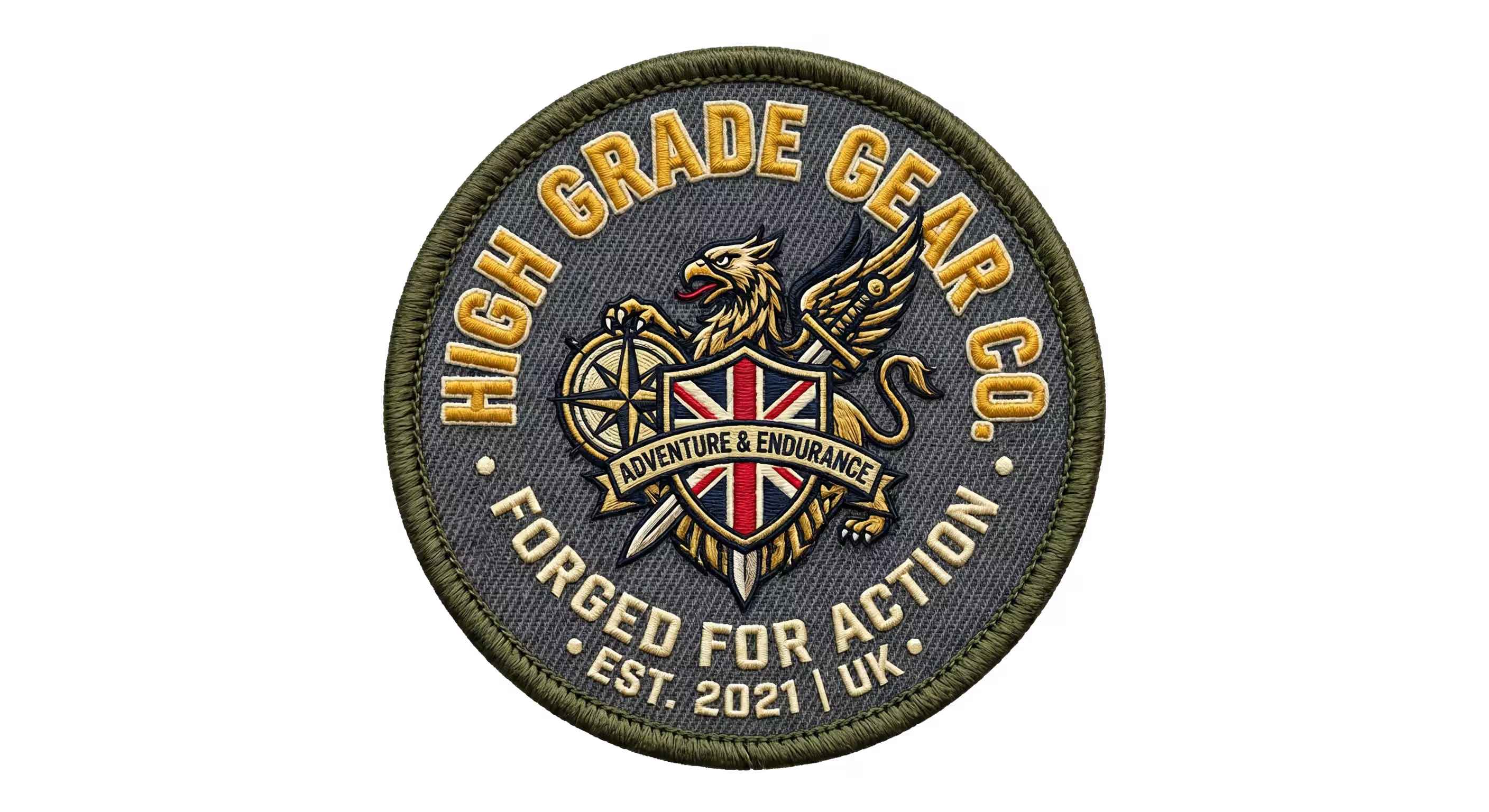
Morale Patches
Morale patches are identity-building badges that carry unit emblems, team mottos and novelty designs. A morale patch strengthens team identity rather than formal identification, and the hook-and-loop backing lets wearers display, remove or collect them freely. Police teams, tactical units and security crews use morale patches to mark shared experience, and these patches connect to our wider morale and tactical patches collection.
Patch Construction Options
Custom police Velcro patches are produced in three main constructions, and each construction suits a different operational demand. The construction determines durability, finish and cost, so the buyer selects the method after fixing the patch type and use case. All three constructions accept hook-and-loop backing, which keeps the identification removable regardless of the front material.

Embroidered Police Patches
Embroidered police patches are stitched from coloured thread onto a twill base fabric, then finished with a merrow or laser-cut border. Embroidery produces a raised, textured surface that suits collar numbers, force names and traditional insignia. The thread count signals quality, and a dense stitch holds detail through repeated wear and washing. Embroidered patches remain the most common construction for UK police uniforms, because the finish reads as official, durable and regulation-appropriate. Digitising converts the artwork into a stitch file before production, which ensures every letter and emblem reproduces accurately.

PVC / Rubber Police Patches
PVC police patches are moulded from flexible rubber rather than stitched from thread. PVC resists water, fades slowly and survives abrasion, which suits plate carrier panels, outdoor deployments and tactical rigs. A PVC patch carries crisp 2D or raised 3D detail, and the mould holds sharp edges that embroidery cannot match. Security teams and tactical units choose PVC for high-contact environments, because the material wipes clean and tolerates rough handling. The trade-off is finish: PVC reads as modern and tactical rather than traditional, so collar number patches for formal uniforms usually stay embroidered.

Printed & Reflective Patches
Printed police patches reproduce full-colour artwork and photographic detail through dye or transfer printing onto a smooth fabric surface. Printing captures gradients, fine text and complex logos that thread cannot render. Reflective patches extend this construction by printing onto light-returning material, which produces the silver-on-colour hi-vis effect used for night identification. Printed and reflective patches suit reflective ID tags, company-name panels and detailed insignia, and they offer the lowest-cost route for designs with many colours.
Velcro vs Sew-On vs Iron-On for Police Uniforms
Police patches attach through three backing methods, and the backing decides whether the patch is removable, permanent or semi-permanent. Hook-and-loop backing is removable, sew-on backing is permanent, and iron-on backing is semi-permanent. Unlike iron-on patches, which bond once through heat, hook-and-loop patches detach and reattach across an officer's entire kit. The table below compares the three methods against the demands of police and security work.
| Attribute | Velcro (Hook-and-Loop) | Sew-On | Iron-On |
|---|---|---|---|
| Removable | Yes, swap in seconds | No, permanent | No, semi-permanent |
| Best for | Collar numbers, rig panels, shift kit | Fixed force insignia | Light, low-wear items |
| Repositionable | Yes, unlimited | No | No |
| Durability under wear | High | Highest | Low to moderate |
| Garment damage | None | Needle holes | Possible heat marks |
| Police suitability | Preferred for operational kit | Suited to permanent badges | Not recommended for duty wear |
| Application | Press onto loop field | Hand or machine stitch | Heat press at home |
Hook-and-loop backing wins for police and security use because operational kit changes constantly. An officer transfers a collar number from shirt to jacket to plate carrier across a single shift, and only a removable patch supports that workflow. Sew-on backing suits patches that never move, such as a permanently fixed force crest, while iron-on backing rarely suits duty wear because heat adhesive weakens under friction and repeated washing. For the mechanics of attaching either side correctly, see our guide on how to attach hook-and-loop patches.
Sizing & Specifications
Custom police Velcro patches follow specific size and specification standards, and matching these standards ensures the patch fits the uniform's existing Velcro field. The specification covers size, colour reproduction and the hook-versus-loop decision. Getting the specification right before production prevents the most common ordering error, a patch that does not fit the field it must attach to.
Common Police Patch Sizes
Police patch sizes range from small collar tags to large rig panels, and each size maps to a mounting position. Collar number and ID tags measure roughly 50–120mm wide to fit chest and shoulder fields. Shoulder and epaulette patches sit in the mid-range to match upper-arm fields. Plate carrier and rig panels reach around 220 × 100mm to brand the large loop areas on body armour. The patch size must match the loop field already fitted to the garment, so measuring the existing Velcro area is the essential first step before ordering.
Collar / ID tag: 50–120mm wide | Shoulder / epaulette: mid-range fit | Plate carrier / rig: up to 220 × 100mm
Colour Matching & Pantone Reproduction
Colour matching reproduces force, security or unit colours accurately through the Pantone (PMS) reference system. A Pantone code fixes the exact colour, and the patch reproduces that code in thread, PVC or print. Accurate colour matching matters for police and security branding, because uniform colours follow defined standards rather than approximation. Supplying a PMS code with the artwork guarantees the finished patch matches the intended colour across every reorder.
Hook Side vs Loop Side - Which You Need
The hook side and the loop side are the two halves of a hook-and-loop fastener, and the patch carries one while the garment carries the other. Most police uniforms and plate carriers have the soft loop field already sewn on, so the patch needs the stiff hook side to attach. Ordering the wrong side produces a patch that will not bond, which is the single most frequent fitting mistake. Our hook side vs loop side guide explains how to identify which side your kit needs before you order.
Is It Legal to Order Custom Police Patches in the UK?
Yes, ordering custom police-style patches is legal in the UK when the patches serve security, training, cadet or other approved purposes and do not reproduce genuine official force insignia. UK law protects authentic police badges, crests and identifiers, so unauthorised reproduction of a real force's official insignia is not permitted. The distinction is between official insignia and police-style patches, and that distinction governs every legitimate order.
Police-style patches use unique branding that clearly separates the wearer from a sworn police officer. Security firms, enforcement teams, training providers and cadet organisations order patches that signal their genuine role, "SECURITY", a company name, a training-unit identifier, rather than imitating a specific police force. This clear distinction protects both the buyer and the public, because it prevents impersonation while still allowing legitimate organisations to brand their kit professionally.
Serving officers and approved police bodies order genuine collar numbers and force identifiers through authorised channels, and these orders follow each force's own procurement rules. We produce patches for legitimate, approved use, and we work with buyers to ensure designs respect the boundary between official insignia and lawful police-style branding. When in doubt about a design, the safe path is branding that identifies the genuine organisation rather than copying a real force's protected insignia.
How to Order Your Custom Police Velcro Patches
Ordering custom police Velcro patches follows five clear steps, and each step moves the design from artwork to delivered patch. The process suits individual officers, security firms and large unit orders alike, because the same workflow scales from a single collar number to a full team set. Following the steps in order prevents revisions and keeps turnaround fast.
Send your artwork and details.
Supply your design, collar number, role text or logo, along with the size of the Velcro field on your kit. Include a Pantone code if your force or company colours follow a defined standard.
Receive a free digital proof.
Our team digitises the artwork and returns a digital proof, so you confirm the layout, lettering and colours before production begins.
Approve and choose your backing.
Approve the proof, then select hook-and-loop backing and confirm whether you need the hook side or the loop side to match your garment.
Production.
Your patches enter production in your chosen construction, embroidered, PVC or printed, with the agreed size, colours and backing.
UK tracked delivery.
Finished patches dispatch with tracked delivery across the UK, so you receive your order quickly and follow it to the door.
Buyers who need help at any stage can request a free quote and discuss design, size and quantity with our team before committing. Sending clear artwork and an accurate field measurement at step one is the surest way to a patch that fits first time.
Our Customer Reviews
Frequently Asked Questions
Are police Velcro patches removable?
Can I order custom collar number patches in the UK?
Is it legal to buy custom police patches in the UK?
Do you make reflective police patches?
What construction lasts longest for tactical use?
Do I need the hook side or the loop side?
Summary
Custom police Velcro patches give UK officers, security firms and enforcement teams a removable identification system that moves with their kit rather than staying fixed to one garment. The hook-and-loop design supports the constant garment changes that define operational and security work, and it covers everything from a single collar number to a full plate carrier panel. Construction follows the role, embroidery for formal uniforms, PVC for tactical durability, print for reflective and full-colour detail, while size and colour follow the field and standards already in place. Within the boundary that separates lawful police-style branding from protected official insignia, these patches let genuine organisations identify their people clearly, professionally and legally. To turn your design into a fitted, delivered patch, get a free quote and our team will guide you from artwork to dispatch.