Custom Sports Velcro Patches
Sports Velcro patches are custom hook-and-loop badges with a removable backing that attach to a loop panel sewn onto sports kits, training tops, and team bags. UK sports clubs use them to swap sponsor logos, player names, and squad numbers without buying new kit. Each patch is made in the UK with embroidered, woven, PVC, or printed construction, then finished with a strong hook backing. This guide explains what sports Velcro patches are, why teams choose them, and how to order them.
What Are Custom Sports Velcro Patches?
A sports Velcro patch is a fabric or moulded badge that fastens to a garment through a hook-and-loop system rather than stitching or heat. The patch carries the hook side. The garment carries the loop side, sewn on as a fixed loop panel. The hook side grips the loop side on contact, which holds the patch in place during training and matches. Pulling the patch away releases it cleanly, leaving the loop panel and the kit undamaged.
This removable mechanism separates Velcro patches from permanent options. Iron-on patches bond to fabric through heat-activated adhesive. Sew-on patches lock to fabric through thread. Sports Velcro patches stay attached through grip alone, so a club can reposition or replace a badge in seconds. The hook backing turns a single kit into a reusable base for many designs.
UK sports clubs apply these patches to football shirts, rugby jerseys, cricket whites, martial-arts gis, cycling tops, and kit bags. A grassroots football club fixes its crest to the chest, a sponsor logo to the sleeve, and a player name to the back. When the sponsor changes or a player leaves, only the patch changes. The garment remains the same. This logic, one fixed kit, many swappable badges, drives most sports demand for hook-and-loop patches.
Why Sports Teams Choose Velcro Patches
Sports teams choose Velcro patches because kit needs change faster than kit can be replaced. Sponsors rotate each season. Players join and leave the squad. Tournaments demand event-specific branding. A Velcro backing absorbs every one of these changes at the patch level, which protects the club's budget and keeps the kit consistent. The four reasons below explain where this flexibility delivers the most value.
Swappable Sponsor & Sponsorship Logos
Sponsor logos change between seasons, and Velcro patches handle that change without new kit. A club stitches one loop panel onto each shirt, then attaches the current sponsor patch to it. When the sponsorship deal ends, the club peels off the old patch and applies the new one. The shirt stays in rotation. This swap keeps sponsor branding current while the kit budget stays fixed, which matters most for clubs that secure short-term or multiple sponsors across a season.
Interchangeable Player Names & Squad Numbers
Player names and squad numbers move between players, and removable patches make that transfer simple. A squad shares a pool of training tops, each carrying a loop panel. A player attaches a personalised name patch before a session and removes it afterwards. The same top serves a different player the next week. Embroidered name patches and woven number patches both suit this use, because both survive repeated attachment and washing. Reusable kit reduces the cost per player across a full squad.
Tournament, Cup & Season-Specific Badges
Tournaments and cup competitions require dedicated badges, and Velcro patches add them without altering the base kit. A team attaches a tournament patch for a weekend competition, then removes it once the event ends. Cup-run badges, charity-match patches, and commemorative designs all apply the same way. The kit returns to its standard configuration between events. This keeps one set of shirts compliant across league fixtures, cup ties, and friendlies, rather than forcing separate kits for each.
One Kit, Multiple Configurations
A single Velcro-ready kit supports unlimited badge configurations, which is the core cost advantage for any club. The club invests once in kit fitted with loop panels. After that, every design update happens through low-cost patches rather than full re-orders. Sponsor patch on Saturday, charity patch on Sunday, standard crest on Monday, the same shirt covers all three. This model converts a recurring kit expense into a one-off setup plus cheap patch top-ups, which is why budget-conscious UK clubs favour hook-and-loop over iron-on and sew-on badges.
Types of Sports Velcro Patches
Sports Velcro patches come in four main construction types, and each type suits a different design and sport. The construction sets the patch's detail level, durability, and finish. The hook-and-loop backing stays the same across all four. A club chooses the type based on its crest complexity, its sport's conditions, and its sponsor artwork. The sections below define each type and its best sporting use.

Embroidered Sports Patches
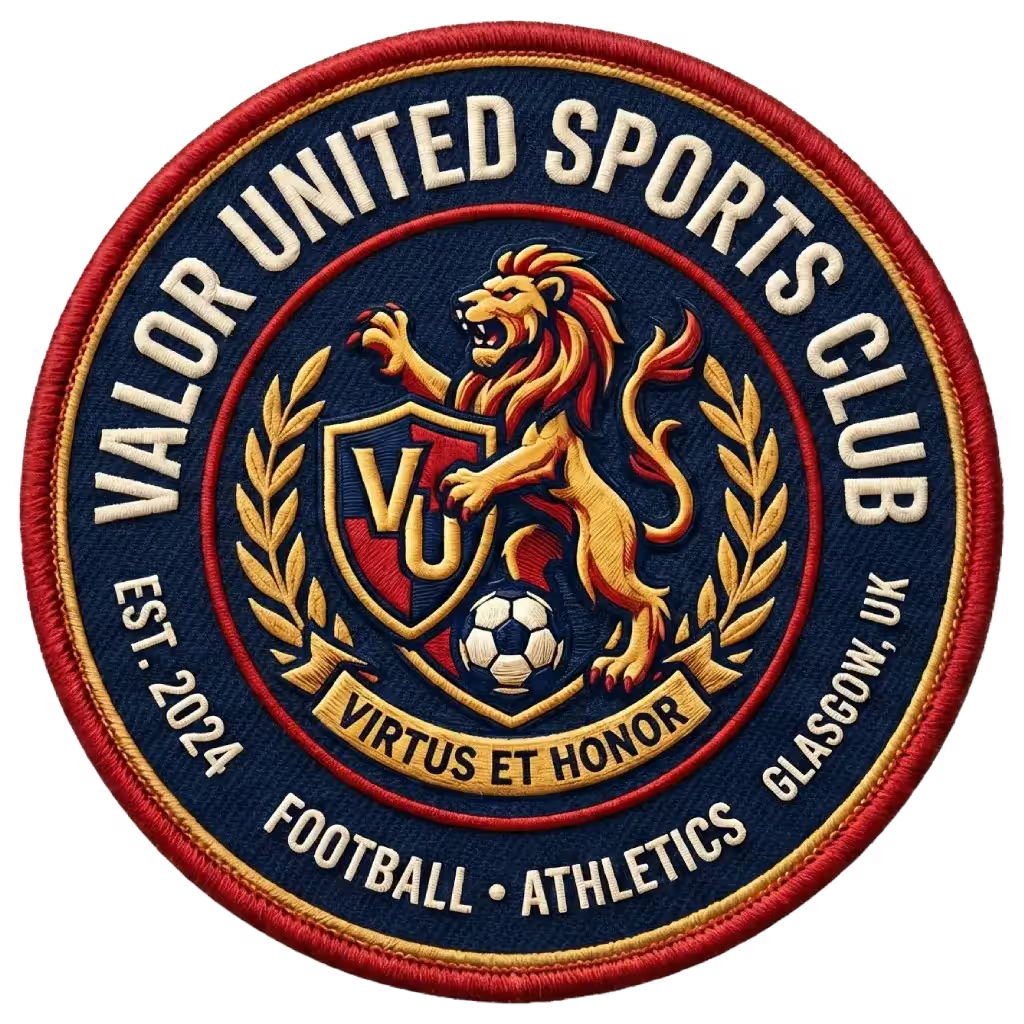
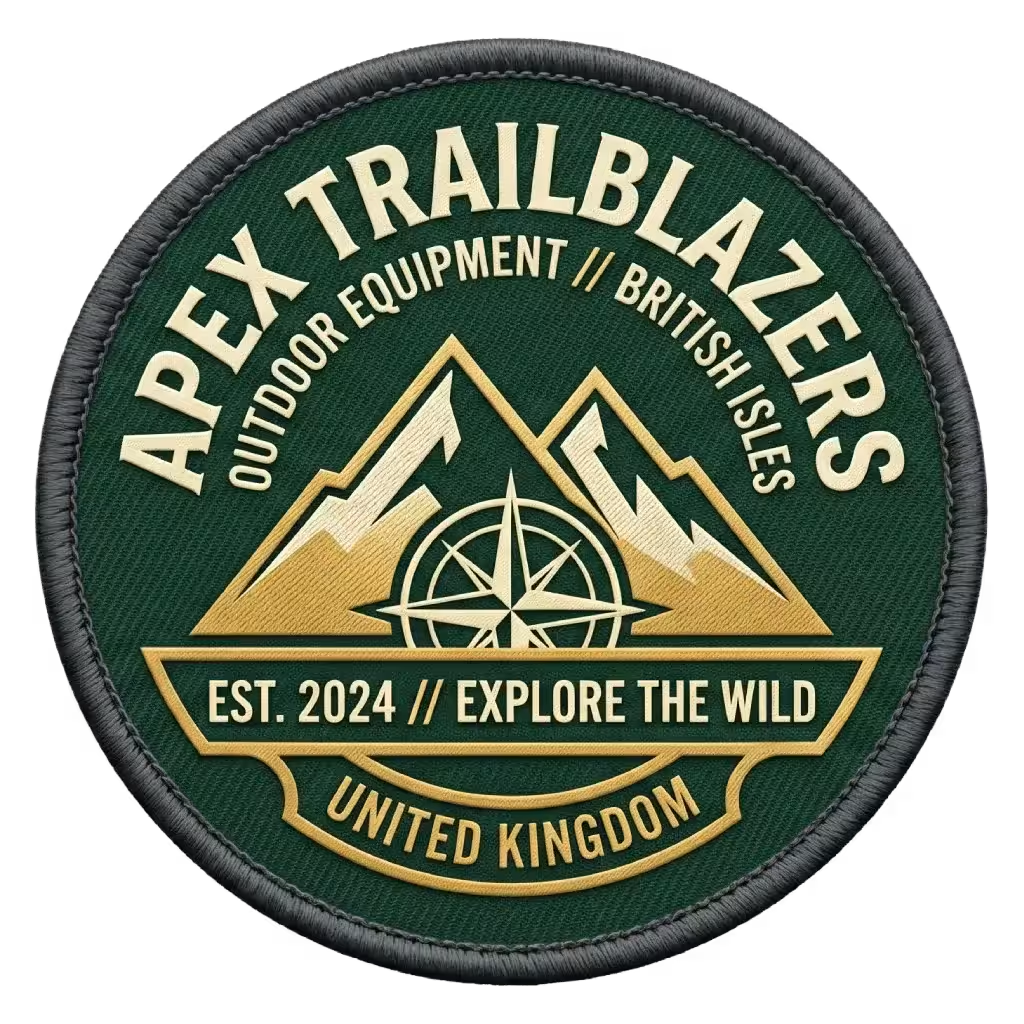
Embroidered sports patches carry the design in stitched thread on a twill base, which gives a classic, raised, durable finish. The thread count starts at around 1,000 stitches and rises with detail. Embroidery handles bold club crests, lettering, and simple logos well. It resists fraying and survives repeated washing, which suits the high-contact demands of football, rugby, and martial arts. Most UK club crests use embroidered patches because the stitched texture reads as traditional and premium.
Woven Sports Patches
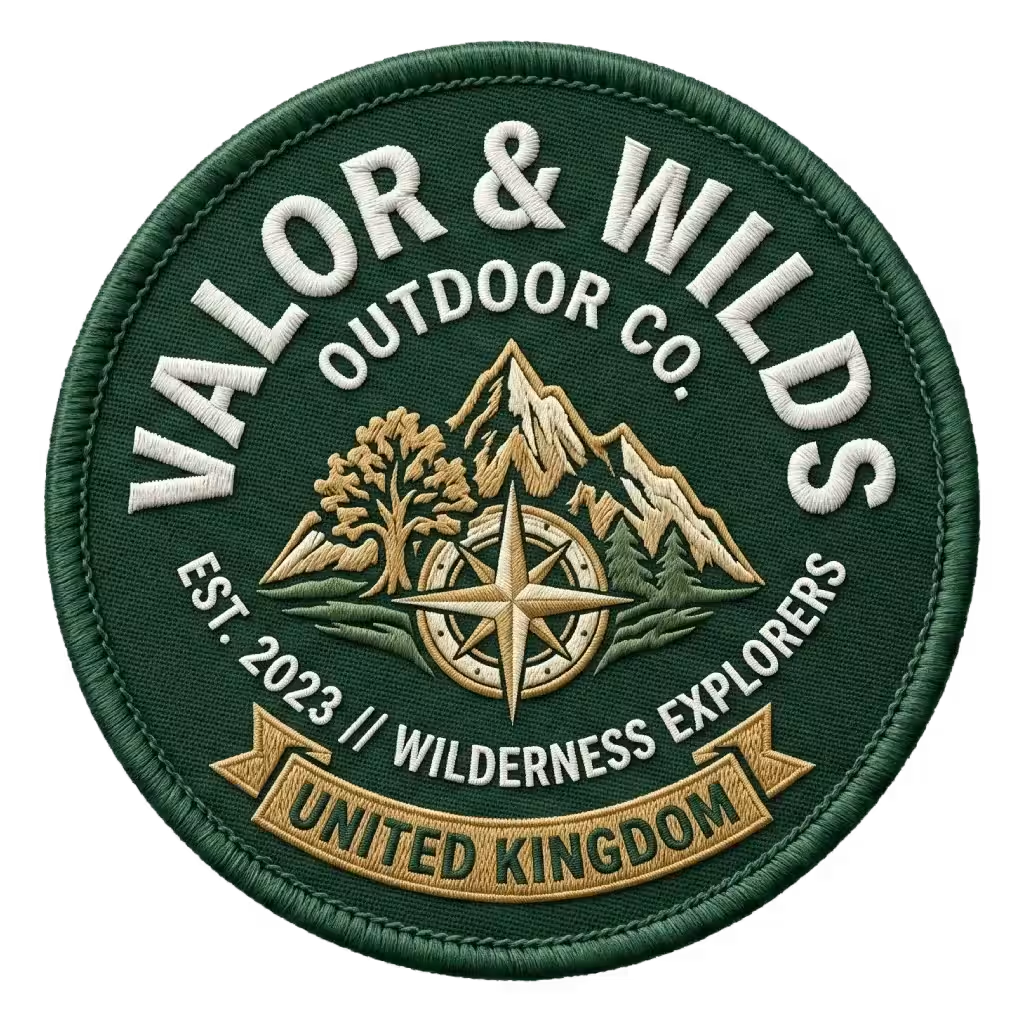
Woven sports patches form the design through fine woven thread rather than stitched thread, which captures small detail that embroidery cannot. The thread density is higher, so the profile is thinner and the resolution is sharper. Woven patches suit small sponsor logos, fine lettering, and intricate emblems. A cycling top with a detailed sponsor wordmark or a cricket cap with a small crest both benefit from woven construction. Woven patches stay flat and lightweight, which keeps them comfortable on close-fitting sportswear.
PVC / Rubber Sports Patches
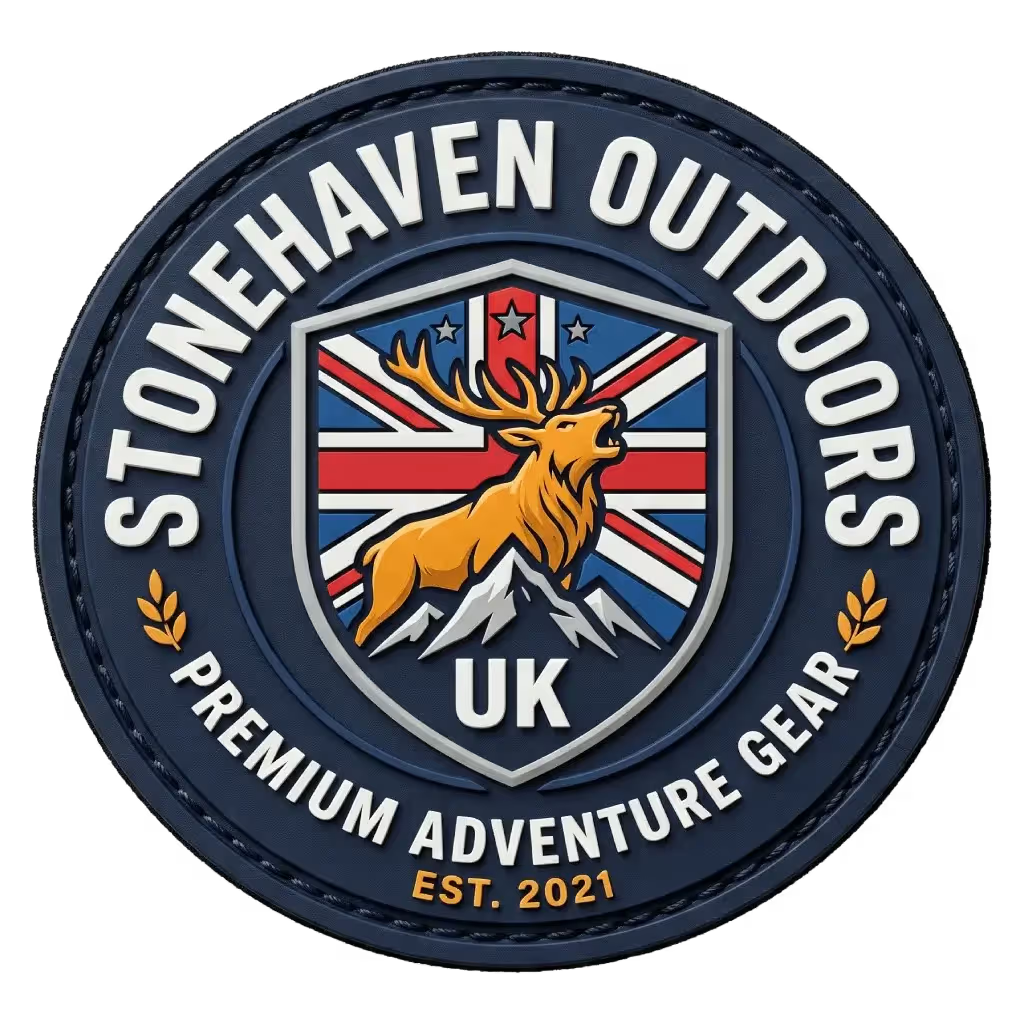
PVC sports patches are moulded from soft rubber, which makes them fully waterproof and colour-fast. The mould forms the design in 2D flat or 3D raised relief. PVC resists water, mud, sweat, and UV exposure, which makes it the strongest choice for outdoor and wet-weather sports. Mountain biking, motorsport, obstacle racing, and outdoor adventure clubs use PVC patches because the material does not absorb moisture or fade. The rubber surface wipes clean, so the patch stays sharp across a full season outdoors.
Printed / Sublimation Sports Patches
Printed and sublimation sports patches reproduce the design through dye-sublimation printing, which delivers full-colour, photographic, gradient artwork. The print covers a smooth fabric surface with no stitch or thread limit on colour. This type suits complex sponsor logos, gradient brand colours, and photographic designs that embroidery and weaving cannot reproduce. E-sports teams and event organisers favour printed patches because modern sponsor branding often uses gradients and fine colour blends. The lightweight finish sits flat on technical sportswear.
Sports Velcro Patch Types Compared
| Patch Type | Best For | Detail Level | Durability | Finish |
|---|---|---|---|---|
| Embroidered | Club crests, bold logos | Medium | Very high | Raised, textured, classic |
| Woven | Small sponsor logos, fine lettering | High | High | Thin, flat, sharp |
| PVC / Rubber | Outdoor & wet-weather sports | Medium | Highest (waterproof) | Moulded 2D/3D, wipe-clean |
| Printed / Sublimation | Gradients, photographic artwork | Highest (full colour) | Medium | Smooth, full-colour, flat |
Every type above ships with the same hook-and-loop backing, so the choice depends on the artwork and the sport rather than the attachment. A club with a simple crest and a wet-weather schedule pairs embroidery for the crest with PVC for outdoor sessions. The next section maps these types to specific sports.
Sports That Use Velcro Patches
Velcro patches serve a wide range of UK sports, and each sport applies them to a different garment and purpose. The removable backing fits any kit with a loop panel, so the use cases span team sports, individual sports, and clubs. The list below covers the most common sporting applications:
- Football - clubs attach crests to the chest, sponsor logos to the sleeve, and player names to the back of shirts and training tops.
- Rugby - teams swap sponsor and tournament badges on jerseys between league and cup fixtures.
- Cricket - clubs apply small woven crests to caps and sponsor patches to whites and training wear.
- Martial Arts & BJJ - practitioners attach gi patches and rank badges that move between gis without permanent stitching.
- Cycling - riders fix sponsor and club patches to jerseys and bib shorts, using flat woven or printed construction.
- Motorsport - drivers and teams use PVC and embroidered patches on suits, which withstand outdoor and pit conditions.
- Athletics - clubs add removable squad and event badges to vests and warm-up tops.
- E-Sports - teams use printed and sublimation patches to display gradient sponsor branding on jerseys.
- School & Youth Sports - schools attach swappable team and house badges to PE kit and bags, reused across pupils each year.
Each sport above shares one requirement: the kit changes more often than the garment. Velcro patches meet that requirement through their backing, while the specifications below let a club tailor each patch to its sport.
Specifications & Options
Sports Velcro patches offer adjustable specifications, and the right settings depend on the sport, the garment, and the design. A club sets the size, backing, colour, and border at the order stage. These four specifications control how the patch fits the kit and how closely it matches the club's identity. The options below define each one.
Sizes & Placement
Patch size depends on placement, and sports kit uses four common positions. Chest crests typically measure 70–100mm wide. Sleeve sponsor patches measure 50–80mm. Full-back patches for jackets and warm-up tops measure 200–250mm. Kit-bag patches scale larger for visibility. The patch is sized in millimetres to match the garment area, so a sleeve patch stays proportionate while a back patch reads from a distance.
Backing Options
The backing controls attachment, and sports patches use one of two hook-and-loop setups. The first supplies the patch with a full hook backing for kit that already carries a loop panel. The second supplies both the hook patch and a matching loop panel for the club to stitch onto new kit. Clubs fitting Velcro for the first time choose the supplied loop panel, while clubs adding patches to existing Velcro-ready kit need only the hook backing.
Colour Matching
Colour matching aligns the patch with club colours, and Pantone (PMS) codes set the standard. A club supplies its exact Pantone references, and the patch reproduces those colours in thread, weave, or print. Pantone matching keeps the patch consistent with the kit, the badge, and any existing branding across the club. Accurate colour holds the club's identity together across every patch and every season.
Borders
The border finishes the patch edge, and sports patches use two main styles. A merrow border overlocks the edge with stitched thread, which is the standard finish on embroidered patches and gives a raised, traditional edge. A laser-cut border slices the edge precisely, which suits custom and shaped patches with a clean, modern finish. The border choice follows the patch shape: merrow for standard shapes, laser-cut for detailed or die-cut designs.
Quick spec reference: MOQ: from 10 | Turnaround: 10–14 days (UK) | Backing: hook-and-loop | Colour: Pantone matched | Borders: merrow or laser-cut
How to Order Custom Sports Velcro Patches in the UK
Ordering sports Velcro patches follows five steps, and the process moves from artwork to UK delivery. A club starts with a design and ends with finished patches fitted with hook backing. Each step confirms one detail of the order before production begins, which prevents errors on team-wide quantities. The numbered steps below set out the full process:
Submit your artwork or crest.
Send the club crest, sponsor logo, or player-name design as a file. A rough sketch works too, because the design team converts it into a production-ready file through embroidery digitising.
Receive a free digital proof.
The team returns a digital proof that shows the patch size, colours, and layout. The proof confirms the design before any patch is made.
Choose type, size, and backing.
Select the construction (embroidered, woven, PVC, or printed), the size in millimetres, and the backing (hook only, or hook plus a loop panel).
Approve the proof.
Approve the final proof, including Pantone colours and border style. Approval locks the specification and releases the order to production.
Production and UK delivery.
The patches are manufactured and dispatched across the UK by tracked delivery, typically within 10–14 days of approval.
Each step confirms a detail that the next step depends on, so the order reaches production fully specified. The digital proof carries the most weight, because it verifies the design before a full team quantity is produced. Once a club completes these steps, the question becomes which attachment method suits the kit, and the comparison below answers it.
Sports Velcro Patches vs Iron-On & Sew-On for Kit
Velcro, iron-on, and sew-on patches attach to kit in three different ways, and the right method depends on whether the design needs to change. Velcro patches are removable. Iron-on patches are semi-permanent. Sew-on patches are permanent. For sports kit that carries rotating sponsors and player names, removability is the deciding factor. The table below compares the three methods across the attributes that matter to a club.
| Attribute | Velcro (Hook-and-Loop) | Iron-On | Sew-On |
|---|---|---|---|
| Removable | Yes, swap in seconds | No, permanent once applied | No, permanent once stitched |
| Best for | Rotating sponsors, names, events | Fixed badges, home application | Permanent crests, heavy use |
| Application | Press onto loop panel | Heat press / iron | Hand or machine stitch |
| Reusable kit | Yes, one kit, many designs | No | No |
| Wash care | Remove before washing | Wash with garment | Wash with garment |
| Sport fit | Teams with changing branding | Clubs with one fixed design | Clubs needing maximum hold |
Unlike iron-on patches, which bond permanently through heat, Velcro patches release cleanly and reattach without tools. Unlike sew-on patches, which lock to one garment through thread, Velcro patches move between garments freely. This removability is why sports clubs with seasonal sponsors and shared squad kit choose hook-and-loop over the permanent alternatives. Clubs with a single, unchanging crest may still prefer sew-on for its permanent hold.
Our Customer Reviews
Frequently Asked Questions
Can you wash sports kit with Velcro patches on?
Do Velcro patches stay on during a match?
Is there a minimum order for sports team patches?
Can I change the sponsor logo each season?
Are Velcro patches suitable for outdoor sports?
Get a Free Quote
Custom sports Velcro patches give UK clubs a single kit that adapts to every sponsor, player, and tournament through a swappable hook-and-loop backing. The construction, embroidered, woven, PVC, or printed, sets the detail and durability, while the removable backing protects the kit budget across changing seasons. From grassroots football to martial arts and e-sports, the same principle holds: invest once in Velcro-ready kit, then update the design through low-cost patches rather than full re-orders.
Ready to kit out your club with custom velcro patches? Get a free quote for your sports patches and our team will send a free digital proof, with low minimums, Pantone-matched colours, and tracked UK delivery.