Patch Sizing Guide: Custom Patch Sizes
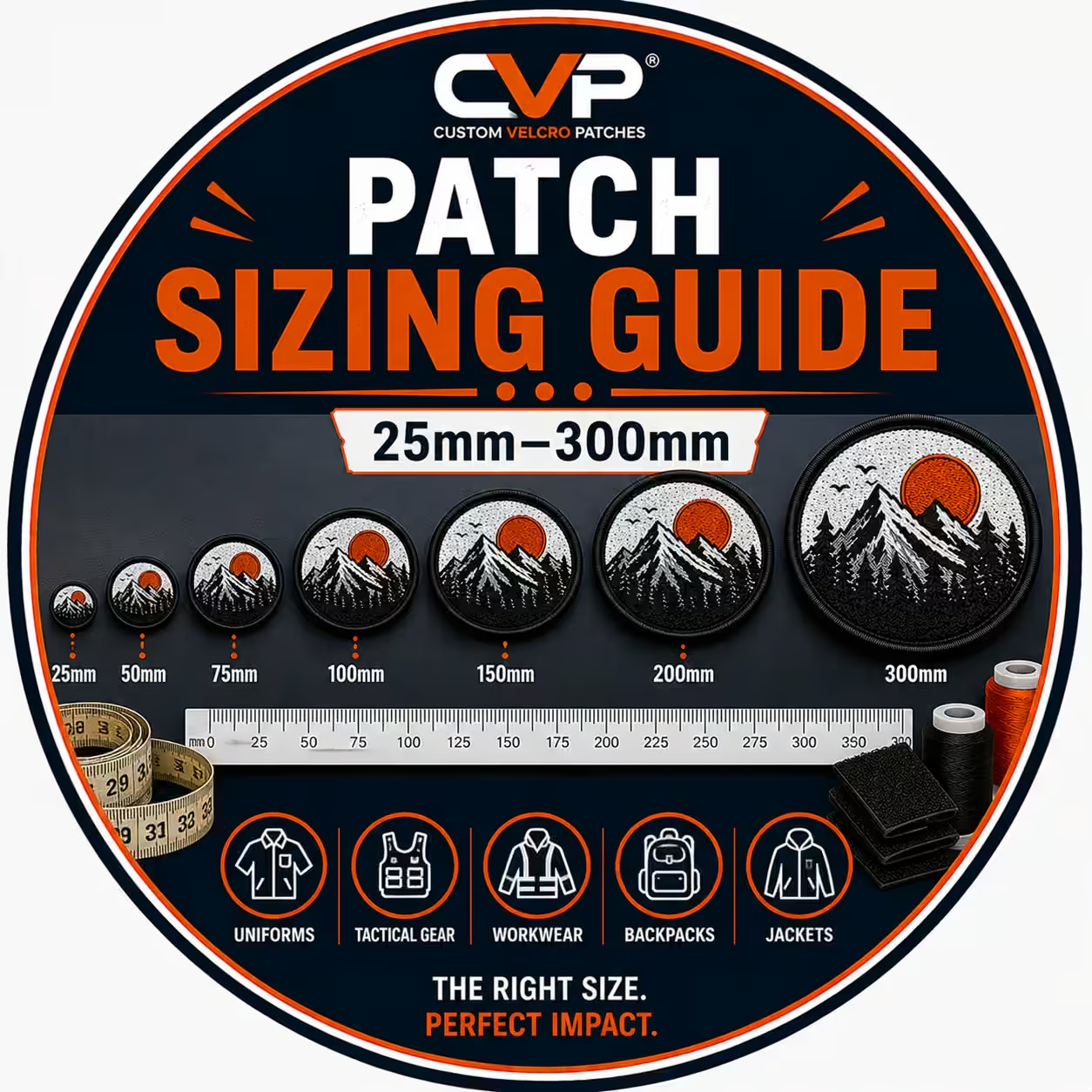
Patch size is the overall dimension of a custom patch, measured in millimetres across a standard range of 25mm to 300mm. This guide shows you how to choose the correct patch size for your garment, placement, and patch type before you order. Bespoke patches are made to exact millimetre dimensions in the UK, so the right size depends on where the patch sits, how much detail your design carries, and which patch type you select. Embroidered patches, woven patches, and PVC patches each behave differently as size changes, and this guide explains every one.
What Is Patch Size and How Is It Measured?
Patch size refers to the finished width and height of a patch, stated in millimetres. A patch has two dimensions: a width and a height. Manufacturers express the overall size as a single figure by averaging these two measurements. This single figure gives buyers a quick reference and lets us quote accurately.
Patch size determines visual prominence and dictates how much design detail a patch can hold. A larger patch displays fine text and intricate logos clearly. A smaller patch suits subtle branding and tight placements. The size you choose therefore controls both the appearance and the function of the finished patch.
How to Measure Patch Size
The industry uses a simple averaging formula to calculate overall patch size. You add the width to the height, then divide the total by two. This formula works for every shape, including circles, shields, hexagons, and fully custom outlines.
To measure your patch size:
1. Measure the width of your design at its widest point, in millimetres.
2. Measure the height of your design at its tallest point, in millimetres.
3. Add the two figures together, then divide by two.
For example, a design that measures 80mm wide and 60mm tall has an overall size of 70mm. You add 80 and 60 to reach 140, then divide by two to reach 70mm. Always measure the longest dimensions without rotating the artwork, because rotation changes the recorded width and height.
Why Patches Are Measured in Millimetres in the UK
UK patch suppliers measure patches in millimetres because the metric system is the British standard for manufacturing. Millimetres give precise control over small dimensions, which matters when a 5mm difference affects text legibility. Many global guides quote sizes in inches, so this guide includes both units in the size chart for clarity. One inch equals 25.4mm, so a 3-inch patch measures roughly 76mm.
How Border Type Affects the Final Measured Size
The border edge changes the finished dimensions of an embroidered patch. A patch has a design area and a border that frames it. The two border types — merrow border and laser-cut border — add to the overall size in different ways.
A merrow border is an overlocked thread edge stitched around the patch. The merrow border adds roughly 3mm to 4mm around the entire design. A laser-cut border is a precision die-cut edge that follows the design outline closely. The laser-cut border adds almost no extra width, which makes it suited to small patches and custom shapes. You should account for the border when you set your target size, because the design area sits inside it. For full detail on edge finishes, see our guide to merrow border and laser-cut border edges.
Custom Patch Size Chart (25mm–300mm)
The chart below maps each common patch size in millimetres to its typical use and the patch type that suits it best. Use this chart as a starting point, then adjust for your design complexity and placement.
| Size (mm) | Size (inches, approx.) | Best for | Recommended patch type |
|---|---|---|---|
| 25–40mm | 1″–1.6″ | Caps, lapels, small logos | Woven |
| 50mm | 2″ | Sleeves, scout and cadet badges | Embroidered / Woven |
| 60–75mm | 2.4″–3″ | Chest logos, polo shirts | Embroidered |
| 90mm | 3.5″ | Jacket chest, bags | Embroidered / PVC |
| 100–125mm | 4″–5″ | Workwear, gilets | Embroidered / PVC |
| 150mm | 6″ | Large chest, small back patches | Embroidered |
| 200–250mm | 8″–10″ | Club and MC back patches | Embroidered / Woven |
| 300mm | 12″ | Full jacket-back patches | Embroidered |
For any non-square shape, calculate the overall size with the (width + height) ÷ 2 formula. This keeps your measurement consistent with how every UK patch maker quotes a price.
Standard Patch Sizes by Placement
Patch placement is the single biggest factor in choosing the right size. The garment area sets the maximum width and height your patch can occupy. The four size bands below cover the most common placements, from small caps to full jacket backs.

Small Patches (25mm–50mm)
Small patches measure 25mm to 50mm and suit caps, sleeves, lapels, and chest logos. A 25mm patch holds a simple symbol or a short monogram clearly. A 50mm patch fits a small logo with limited text. Small patches work best with woven construction, because woven thread reproduces fine detail at reduced sizes. Hook-and-loop backing makes small patches easy to swap on caps and tactical gear.

Medium Patches (60mm–90mm)
Medium patches measure 60mm to 90mm and suit chest placements, polo shirts, bags, and jacket fronts. This band is the most popular size for custom embroidered patches in the UK. A 75mm patch displays a company logo with a single line of text legibly. Embroidered patches perform well at this size, because the design area is large enough to carry detailed stitching and a clean merrow border.

Large Patches (100mm–150mm)
Large patches measure 100mm to 150mm and suit workwear, gilets, blazers, and small back placements. A 125mm patch carries a multi-line logo and a strong border. Embroidered patches and PVC patches both hold detail well at this scale. Large patches make a clear statement at viewing distance, which suits corporate branding and team kit.

Extra-Large Patches (160mm–300mm)
Extra-large patches measure 160mm to 300mm and suit full jacket-back patches for clubs, motorcycle clubs, and crews. A 300mm patch covers the upper back of a jacket and displays bold artwork with full text. Embroidered patches at this size carry the highest thread count and the most visual impact. Woven patches suit extra-large designs that contain very fine detail or photographic gradients.
How Patch Type Affects the Right Size
Patch type changes the minimum size at which a design stays sharp. Each patch type reproduces detail differently, so the same logo needs a different size depending on the construction you choose. The three sections below explain how embroidered, woven, and PVC patches behave as size changes.

Embroidered Patch Sizing
Embroidered patches form the design with stitched thread on a twill base. Thread has a physical width, so embroidered patches need more space to render fine lines and small text. An embroidered patch needs a minimum overall size of around 50mm to carry readable text. Below 50mm, fine detail and thin lettering begin to lose clarity. For larger logos, the stitch count rises with the size, which you can read about in our minimum stitch count for small patches guide.

Woven Patch Sizing
Woven patches form the design with fine, tightly woven thread rather than embroidery stitches. Woven thread is thinner than embroidery thread, so woven patches reproduce sharper detail at smaller sizes. A woven patch holds small text and intricate logos cleanly at 25mm to 40mm, where an embroidered patch would blur. Woven construction therefore suits small badges, labels, and detailed crests. See our full guide to woven patches for fine detail at small sizes.
PVC and Printed Patch Sizing
PVC patches form the design from a moulded rubber compound with raised relief. The mould reproduces sharp edges and crisp shapes, so PVC patches hold detail at slightly smaller sizes than embroidered patches. Printed patches use full-colour printing on a smooth surface, which renders photographic detail and gradients that thread cannot. Both PVC and printed patches suit designs with fine colour transitions or complex outlines at compact sizes.
How Patch Size Affects Detail, Text, and Legibility
Patch size sets the limit on how much detail and text a design can hold clearly. A larger patch gives the artwork more space, so fine lines, small lettering, and intricate logos stay sharp. A smaller patch compresses the same elements, which causes thin detail to merge and text to blur. Design complexity and patch size are therefore linked: the more detail your artwork carries, the larger the patch needs to be.
Minimum Text Height for Readable Lettering
Text legibility depends on letter height, not patch size alone. Embroidered thread needs a minimum letter height to render each character cleanly. A letter needs a minimum height of around 6mm to stay readable on an embroidered patch. Below 6mm, thread overlaps and characters lose their shape. A single line of short text therefore needs a patch of at least 50mm to hold legible letters. Longer text or multiple lines need a larger patch to keep every character clear.
When to Size Up for Complex Designs or Logos
Complex designs need a larger patch to preserve their detail. A logo with fine outlines, small icons, or several colours occupies more visual space than a simple symbol. You should size up whenever your artwork contains thin lines, small text, or layered elements. A 90mm patch reproduces a detailed company logo more cleanly than a 50mm patch. When detail matters and space is limited, a woven patch holds finer detail at the same size than an embroidered patch. Every order includes a digital proof, so you can confirm how your design reads at the recommended size before production begins.
How Patch Size Affects Price and Minimum Order
Patch size is one of the main factors that determines patch price. A larger patch uses more material, more thread, and more production time, so the unit cost rises with size. A smaller patch uses fewer resources, which lowers the unit cost. Size and quantity together set the final price, because the cost per patch falls as the order quantity rises.
Custom patches carry a minimum order quantity, which keeps bespoke production cost-effective. The minimum order quantity for custom patches typically starts at low volumes, which suits clubs, schools, and small businesses. Larger patches and higher quantities affect the quote in different ways, so an accurate price depends on both figures. For a full breakdown, see our guide to how patch size affects pricing and minimum order.
How to Choose the Right Patch Size in 4 Steps
Choosing the right patch size follows a clear, four-step process. Each step narrows your decision from placement to final dimension. Follow these steps in order to land on the correct size in millimetres.
Measure the placement area.
Measure the width and height of the garment area where the patch will sit, in millimetres. The placement sets the maximum size your patch can occupy.
Assess your design complexity.
Check your artwork for fine lines, small text, and layered detail. A complex design needs a larger size to stay sharp.
Match the patch type to the size.
Choose woven patches for fine detail at small sizes, embroidered patches for texture and durability, and PVC patches for sharp moulded shapes.
Confirm the size on a digital proof.
Review the digital proof we supply, which shows your design at the recommended size before production. Adjust the dimensions if the detail needs more space.
This process aligns placement, design, and patch type, so the finished patch fits the garment and reproduces your artwork clearly.
Our Customer Reviews
Frequently Asked Questions
Is There a Standard Patch Size?
What Is the Smallest Patch Size You Can Make?
What Size Is a Standard Back Patch?
Do Woven Patches Hold Detail Better Than Embroidered Patches at Small Sizes?
Can I Order a Custom Patch Size in Millimetres?
Key Takeaways
Selecting the correct patch size comes down to three connected decisions: where the patch sits, how detailed the artwork is, and which construction reproduces it best. Millimetres give you precise control across the full 25mm to 300mm range, and the (width + height) ÷ 2 formula keeps your measurement consistent with how UK suppliers quote. Woven patches win on fine detail at small sizes, embroidered patches deliver texture and durability through the mid and large bands, and PVC patches hold crisp shapes in compact moulded designs. Once you have matched placement, design, and patch type, a digital proof confirms the result before anything goes into production. Request a free quote for your custom patch size and our team will recommend the ideal dimensions for your artwork.