Which Velcro Patch Type to Choose
A Velcro patch is a hook-and-loop patch available in six construction types, embroidered, woven, PVC, printed, leather and chenille. The right type depends on three factors: the level of detail in your design, the environment the patch will live in, and your budget. Every type uses the same hook-and-loop backing, so your real decision is about the patch face, not the attachment method.
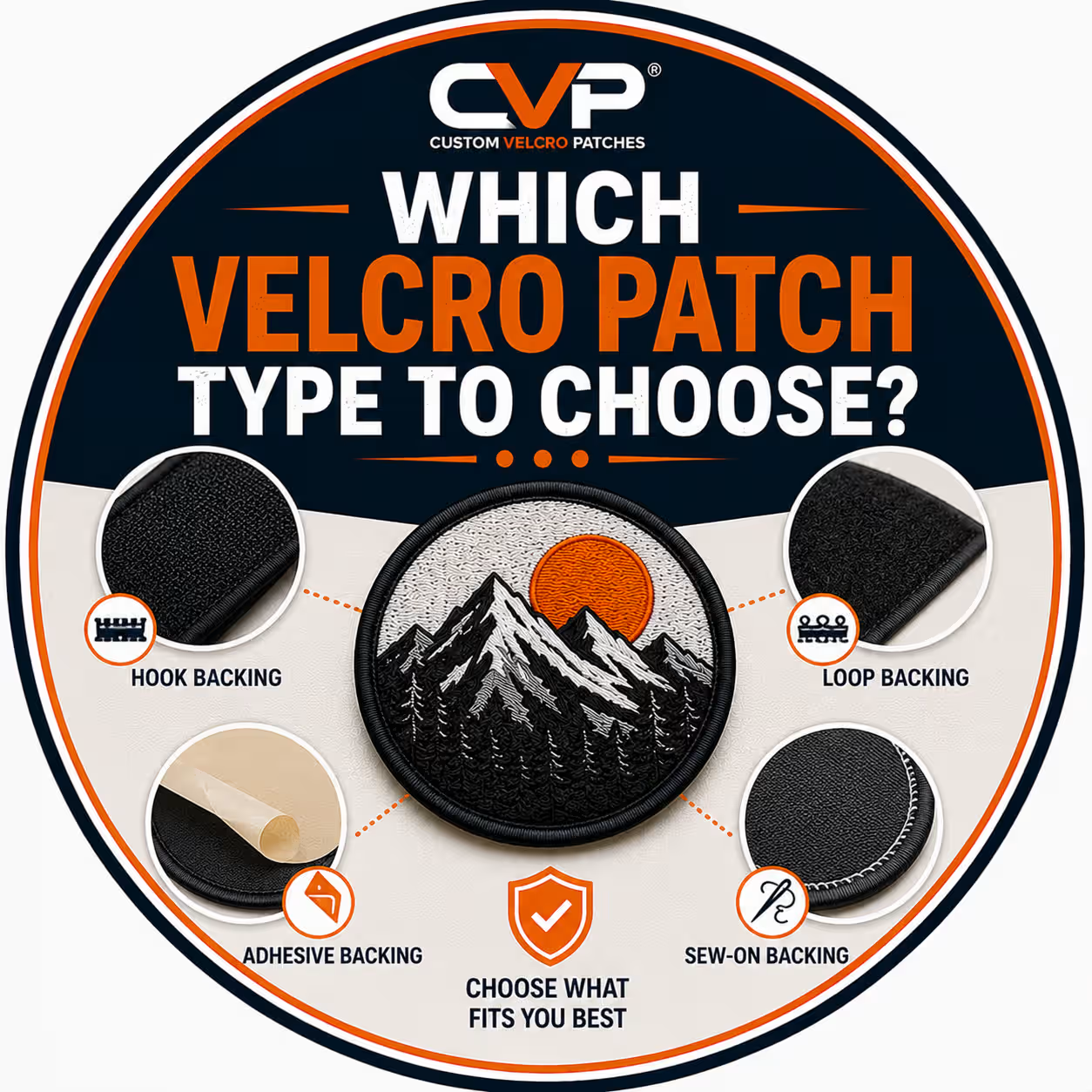
How to Choose a Velcro Patch Type in 4 Steps
Choosing a Velcro patch type follows four decisions. Work through them in order and you will land on the right construction every time.
Match the design detail.
Bold logos and simple shapes suit embroidered patches. Small text, thin lines and intricate logos suit woven patches. Full-colour artwork and gradients suit printed patches.
Match the environment.
Indoor and everyday wear suits embroidered or woven patches. Rain, mud, sweat and tactical use suit PVC patches because they are waterproof and fade-resistant.
Match the budget.
Embroidered patches offer the lowest cost per unit. Woven and PVC patches sit higher. Printed patches stay competitive even on complex designs.
Confirm the hook-and-loop backing.
Every Velcro patch order includes a hook side on the patch and a loop side for your garment, so you attach, remove and swap the patch in seconds.
These four steps cover most orders. The comparison table below shows how each type performs against the attributes that matter, and the sections after it explain each one in detail.
Velcro Patch Types Compared
The six Velcro patch types differ in detail level, durability, texture and cost. Embroidered patches deliver a classic stitched texture. Woven patches deliver sharper detail. PVC patches deliver weatherproof durability. Printed patches deliver full-colour accuracy. Leather patches deliver a premium finish. Chenille patches deliver a bold, fuzzy varsity look. The table below summarises the trade-offs at a glance.
| Patch Type | Best For | Detail Level | Durability | Texture | Relative Cost | Ideal Industry |
|---|---|---|---|---|---|---|
| Embroidered | Bold logos, simple shapes, traditional badges | Medium | High | Raised, stitched | £ (lowest) | Military, cadets, scouts |
| Woven | Small text, thin lines, intricate logos | High | High | Flat, smooth | ££ | Corporate, schools |
| PVC | Outdoor gear, harsh conditions, 3D logos | Medium–High | Very high | Raised rubber | ££ | Tactical, workwear |
| Printed | Photographic detail, gradients, complex colour | Very high | Medium | Flat, smooth | ££ | Sports, events |
| Leather | Premium branding, simple logos | Low–Medium | High | Smooth, embossed | £££ | Lifestyle, headwear |
| Chenille | Letters, varsity designs, statement patches | Low | Medium | Soft, fuzzy | ££ | Sports, MC clubs |
Each type pairs with the same hook-and-loop backing, so the table reflects differences in the patch face alone. The sections below explain when each construction is the right choice.
Embroidered Velcro Patches
An embroidered Velcro patch is a patch stitched with raised thread onto a twill backing, finished with a hook-and-loop fastening. Embroidered patches produce a classic, textured, three-dimensional look that most people recognise as the traditional badge. The stitching gives the patch depth that flat constructions cannot match, which is why military units, cadet forces and scout groups choose embroidery for crests and insignia.
Embroidered patches handle bold logos and simple shapes best. A merrow border seals the edge and stops the thread fraying through repeated attachment and removal. Because embroidery uses thread rather than printing or moulding, embroidered Velcro patches offer the lowest cost per unit across the six types.
Best uses for embroidered Velcro patches
- Military, cadet and police insignia that need a traditional, hard-wearing finish
- Scout, school and club badges with bold lettering and clear shapes
- Morale patches where a raised, tactile texture adds character
- Any design built around solid colour blocks rather than fine gradients
When to avoid embroidered patches
Embroidered patches struggle with small text and thin lines, because individual stitches cannot reproduce detail finer than the thread itself. A logo with tiny lettering, fine linework or photographic shading loses clarity in embroidery. When your design depends on that level of detail, a woven patch reproduces it far more sharply, which is the next type to consider.
Woven Velcro Patches
A woven Velcro patch is a patch made by weaving fine threads tightly together, producing a flat, smooth surface with high detail. Woven patches reproduce small text, thin lines and intricate logos more sharply than embroidered patches, because the finer threads sit closer together than embroidery stitches. The result is a precise, flat finish that suits detailed corporate logos and school crests.
Woven patches carry a slightly higher cost than embroidered patches, and they trade the raised, tactile texture of embroidery for accuracy and a thinner profile. Where embroidery feels handcrafted and dimensional, a woven patch feels sleek and refined. Both constructions are durable and both accept the same hook-and-loop backing.
Best uses for woven Velcro patches
- Corporate logos with fine detail, small lettering or a registered wordmark
- School and institution crests that demand crisp, legible text
- Detailed emblems where sharp lines matter more than texture
- Slim patches for caps, polo shirts and lightweight workwear
Woven vs embroidered for fine detail
Woven patches win on detail; embroidered patches win on texture. If your logo includes text smaller than roughly 4 mm, fine serifs or thin outlines, choose woven for legibility. If your design is bold and you want a raised, traditional feel, choose embroidered. For designs that need full-colour photographic detail rather than thread reproduction at all, a printed or PVC patch becomes the better route, starting with the most durable of the two, PVC.
PVC Velcro Patches
A PVC Velcro patch is a patch moulded from soft, rubber-like plastic, finished with a hook-and-loop backing for repeated attachment. PVC patches are waterproof, fade-resistant and weatherproof, which makes them the strongest choice for outdoor gear, tactical kit and any patch exposed to rain, mud or sweat. The moulding process holds bold colour and a clean 3D effect that thread cannot replicate.
PVC patches resist curling, stay flat at the edges and clean easily with a wipe, so they outlast embroidered and woven patches in harsh conditions. They sit in a similar cost bracket to woven patches and reward designs that use distinct colour zones and raised detail rather than fine gradients.
Best uses for PVC Velcro patches
- Tactical, military and outdoor gear that meets rain, sweat and abrasion
- Workwear and corporate kit used on sites and in the field
- Bold, layered logos that benefit from a raised 3D rubber finish
- Equipment patches that need frequent cleaning without fading
Why PVC suits outdoor and tactical kit
PVC outperforms thread-based patches outdoors because the rubber surface repels water and shrugs off dirt. Embroidered and woven patches absorb moisture and can fade over heavy use, whereas a PVC patch keeps its colour and shape through years of exposure. When your priority shifts from durability to full-colour photographic accuracy, a printed Velcro patch becomes the better option, and that is where part two of this guide begins.
Printed Velcro Patches
A printed Velcro patch is a patch made by printing the design directly onto a fabric backing, finished with a hook-and-loop fastening. Printed patches reproduce photographic detail, gradients and complex colour blends that thread and moulding cannot achieve. The print sits flat on the fabric, so the surface carries no texture or raised depth, the design lives entirely in the colour and detail.
Printed patches handle full-colour artwork at a competitive price, which makes them the practical choice when visual accuracy matters more than feel. Where embroidered and woven patches reproduce a design in thread, a printed patch reproduces it as an image, capturing shading, fine gradients and unlimited colour. Like every other construction, printed Velcro patches accept the same hook-and-loop backing.
Best uses for printed Velcro patches
- Logos with gradients, colour fades or photographic detail
- Event and sports patches that need vivid, accurate colour
- Complex artwork with more colours than thread can economically reproduce
- Designs where a flat, lightweight finish is preferred
When printing beats stitching
Printing beats stitching whenever your design depends on colour blends or fine image detail. A logo with a sunset gradient, a photograph or dozens of colours would be slow and costly to embroider, yet a printed Velcro patch reproduces it cleanly and affordably. Stitching still wins on texture and longevity, so choose printing for accuracy and embroidery or PVC for durability. When the priority moves from colour to a premium, understated finish, a leather patch becomes the type to consider.
Leather Velcro Patches
A leather Velcro patch is a patch made from real or synthetic leather with an embossed or debossed design, finished with a hook-and-loop backing. Leather patches deliver a clean, premium, understated look that suits lifestyle branding, headwear and bags. The design is pressed into the surface rather than stitched or printed, so detail stays simple and the appeal comes from the material itself.
Leather patches carry the highest cost of the six types and reward simple logos over intricate artwork. Where chenille and embroidery add bold texture, leather adds refinement and a tactile, high-end feel. A leather Velcro patch keeps that premium look while still letting you remove and reattach the patch through its hook-and-loop backing.
Best uses for leather Velcro patches
- Premium hat, cap and beanie branding
- Lifestyle and apparel brands wanting an understated, refined finish
- Bags, jackets and accessories where material quality signals the brand
- Simple logos and wordmarks that emboss cleanly
When your design calls for bold lettering and a soft, eye-catching texture instead of refinement, a chenille patch is the final type to weigh up.
Chenille Velcro Patches
A chenille Velcro patch is a patch made from soft, raised yarn that creates a fuzzy, textured surface, finished with a hook-and-loop backing. Chenille patches produce the bold, plush, varsity look familiar from letterman jackets and sports clubs. The yarn gives the patch real depth and a tactile, statement finish that thread and rubber cannot match.
Chenille patches suit large letters, numbers and simple shapes rather than fine detail, because the thick yarn cannot hold small text or thin lines. They sit in a mid-range cost bracket and often carry a lower minimum order than other types. A chenille Velcro patch combines that statement texture with the convenience of hook-and-loop attachment, so clubs swap badges between garments easily.
Best uses for chenille Velcro patches
- Varsity letters, numbers and college-style monograms
- Sports clubs and MC (motorcycle) club designs with bold shapes
- Statement patches where a soft, raised texture is the main appeal
- Large, simple designs rather than detailed logos or small text
Which Velcro Patch Type Is Right for You?
The right Velcro patch type follows directly from your design and where the patch will be used. Match your priority to the recommended construction below.
- If you need small text or sharp logos → choose woven. Fine threads reproduce thin lines and tiny lettering crisply.
- If the patch faces rain, mud or tactical use → choose PVC. Waterproof, fade-resistant rubber survives the harshest conditions.
- If you want a traditional, textured badge → choose embroidered. Raised stitching delivers the classic, hard-wearing look.
- If your artwork has gradients or photographic colour → choose printed. Direct printing captures detail and unlimited colour.
- If you want a premium, understated finish → choose leather. Embossed leather signals quality on hats and bags.
- If you want a bold, varsity texture → choose chenille. Soft, raised yarn makes letters and numbers stand out.
Most buyers fit one of these scenarios cleanly. If you sit between two, weigh detail against durability: woven and printed win on detail, while embroidered and PVC win on toughness. You can confirm the right choice against your design on each Velcro patch type page, or send your artwork for a free quote and we will recommend the best construction.
Our Customer Reviews
Frequently Asked Questions
Can any patch type have a Velcro backing?
Is PVC the best Velcro patch type for outdoor use?
Are woven patches better than embroidered patches for small text?
Does the Velcro patch type affect the price?
Do I need to choose the hook side or the loop side?
Summary
Selecting a Velcro patch comes down to matching three things, how detailed your design is, how tough the patch needs to be, and how much you want to spend. Detailed logos and small text point you towards woven or printed construction, harsh outdoor conditions point you towards PVC, and a traditional textured badge points you towards embroidery. Leather adds a premium edge for lifestyle branding, while chenille brings a bold varsity texture for clubs and teams. Every one of these six types attaches through the same hook-and-loop backing, so once you have chosen the face that fits your design, your custom Velcro patch is ready to attach, remove and reuse on any garment or gear. Send us your artwork and we will confirm the right type for your project.