Velcro Patches vs VELCRO® Brand Fasteners: The Difference Explained
Velcro patches are custom patches finished with a hook-and-loop backing, while VELCRO® Brand fasteners are the trademarked product manufactured by Velcro Companies. Most people use the word "Velcro" as a generic term for any hook-and-loop fastener, yet the two are legally and practically distinct. This guide explains the difference, shows what it means for your custom patch order, and helps UK buyers choose the right backing with confidence.
What Are Velcro Patches?
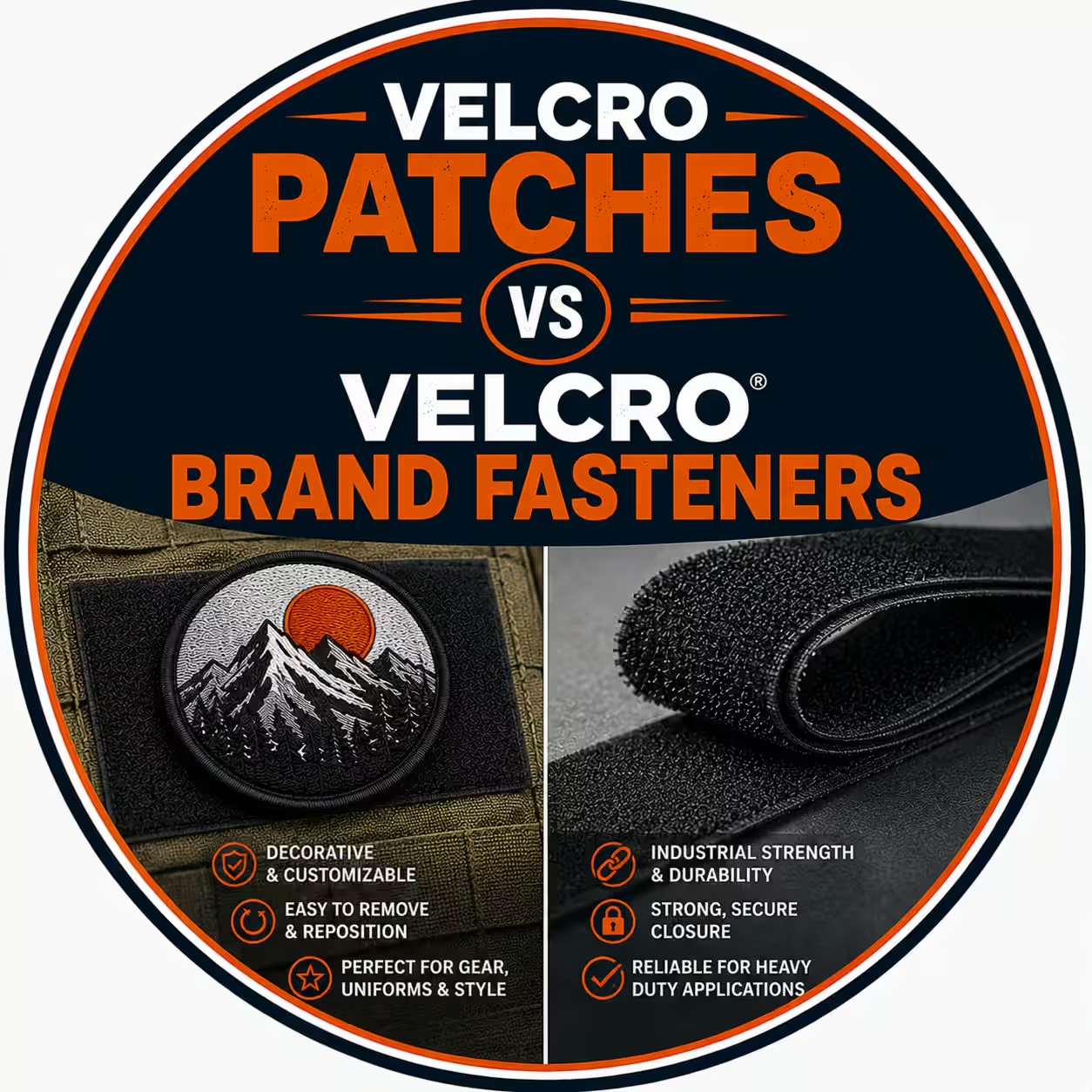
Velcro patches are custom patches that carry a hook-and-loop backing, which lets the patch attach and detach repeatedly without sewing. The patch itself can be an embroidered patch, a PVC patch, a woven patch, or a printed patch, the “Velcro” element refers only to the backing, not the patch face. In everyday language, a “Velcro patch” simply means a hook-and-loop-backed patch. UK customers order these patches for uniforms, tactical gear, and corporate workwear because the backing makes badges interchangeable in seconds.
The hook-and-loop backing consists of two parts that work as a pair. The hook side grips, the loop side receives, and together they form a secure but removable bond. When you buy a custom Velcro patch, you usually receive the hook side bonded to the patch, ready to press onto a matching loop panel on the garment. This removable design is the single biggest reason hook-and-loop backing outsells iron-on and sew-on backing for tactical and morale patches.
What Are VELCRO® Brand Fasteners?
VELCRO® Brand fasteners are the trademarked hook-and-loop products made and licensed by Velcro Companies. The brand name is a registered trademark, written by the company in capital letters with the ® symbol. The generic product, the fastener mechanism itself, is called hook-and-loop. Other manufacturers produce hook-and-loop legally, but their products are not VELCRO® Brand fasteners.
Who Owns the VELCRO® Trademark?
Velcro Companies owns the VELCRO® trademark, and the company has protected it since the mid-twentieth century. Swiss engineer George de Mestral invented the original hook-and-loop fastener in the 1940s after studying burrs that clung to his clothing. He named the invention by blending the French words "velours" (velvet) and "crochet" (hook). The mark is a coined, fanciful trademark, which gives it strong legal protection. Velcro Companies actively defends the name so it does not become fully generic, the way "escalator" once did. Finger Lakes Times
Why VELCRO® Is a Brand, Not a Product Type
VELCRO® is a brand name, and hook-and-loop is the product type, the same way Kleenex is a brand and tissue is the product. The generic name for what most people call a VELCRO® Brand fastener is hook-and-loop, because the fastener has two sides: one made of tiny hooks and the other of soft loops that the hooks grip onto. One brand owns the name; many manufacturers make the product. This distinction matters because a supplier offering "Velcro patches" is almost always describing hook-and-loop backing, not material sourced from Velcro Companies. Velcro
Velcro Patches vs VELCRO® Brand Fasteners: Key Differences
The table below sets out the core differences between a generic Velcro patch and a genuine VELCRO® Brand fastener. Both rely on the same hook-and-loop mechanism, but they differ in ownership, branding, cost, and typical application.
| Attribute | Velcro Patches (generic) | VELCRO® Brand Fasteners |
|---|---|---|
| What it is | A custom patch with hook-and-loop backing | A trademarked branded fastener |
| Correct generic term | Hook-and-loop | Hook-and-loop |
| Made by | Any patch manufacturer | Velcro Companies (or licensed partners) |
| Trademark status | "Velcro" used generically in speech | Registered ® trademark |
| Typical use | Custom patches, badges, club logos | Industrial, medical, branded products |
| Relative cost | Lower | Premium |
| Performance for patches | Excellent for everyday and tactical use | Identical mechanism, branded supply chain |
The key takeaway is straightforward. The mechanism is the same; the name and the supply chain are not. For the vast majority of custom patch orders, standard hook-and-loop backing delivers the exact attach-and-detach performance buyers expect.
How Hook-and-Loop Backing Works on a Patch
Hook-and-loop backing works by pairing two woven surfaces that interlock under light pressure. One surface holds thousands of stiff hooks, and the opposite surface holds soft, flexible loops. When you press the two together, the hooks catch the loops and form a bond. When you peel them apart, the bond releases cleanly, ready to reattach. This repeatable cycle is what makes a Velcro patch reusable across different garments.
The Hook Side
The hook side is the rough, scratchy surface of the fastener. The hook side is made up of many small, stiff hooks that grip onto the loop side and can also catch on carpet, clothing, and fabric. On a custom patch, the manufacturer usually bonds the hook side to the back of the patch. The hook side does the gripping, so it carries the holding strength of the connection. HookandLoop.com
The Loop Side
The loop side is the soft, fuzzy surface that receives the hooks. The loop side is a bed of fine strands of varying size and length that the hooks sink into to take hold. On a uniform or tactical vest, the loop side is the panel sewn onto the garment. The loop side provides the landing surface, so the patch attaches only where a matching loop panel exists. HookandLoop.com
Single vs Double Backing on Patches
Single backing places one fastener side on the patch, and double backing pairs the patch system with both surfaces for a complete attach-and-detach set. The choice affects cost, flexibility, and how you mount the patch. Buyers who already have loop panels on their kit usually need only the hook side bonded to the patch, while buyers starting from scratch may want both. For a full breakdown of which option suits your kit, see our guide to single vs double hook-and-loop backing.
Why the Trademark Distinction Matters When You Order
The trademark distinction matters because it sets honest expectations between you and your patch supplier. A UK supplier advertising “Velcro patches” is, in nearly every case, describing custom patches with a hook-and-loop backing, not patches built from material bought directly from Velcro Companies. This practice is normal and legal, provided the supplier does not claim the branded name as the source. Understanding this protects you from paying a premium for “branded” backing you do not actually need
Buyers run into confusion when they assume “Velcro” guarantees a specific manufacturer. In reality, the holding performance of a custom patch depends on the quality of the hook-and-loop, not the brand printed on an invoice. A well-made generic hook-and-loop backing attaches firmly, releases cleanly, and survives repeated use. The smarter question is therefore not “Is this genuine VELCRO®?” but “Is this hook-and-loop the right grade for how I will use the patch?”
Do You Need Genuine VELCRO® Brand or Standard Hook-and-Loop?
Most custom patch orders do not need genuine VELCRO® Brand material, because standard hook-and-loop delivers the same attach-and-detach function for everyday use. The deciding factor is cycle life, how many times the patch will be attached and removed, and the conditions the patch must survive. Heavier use and harsher environments justify a higher-grade backing.
When Standard Hook-and-Loop Is Right
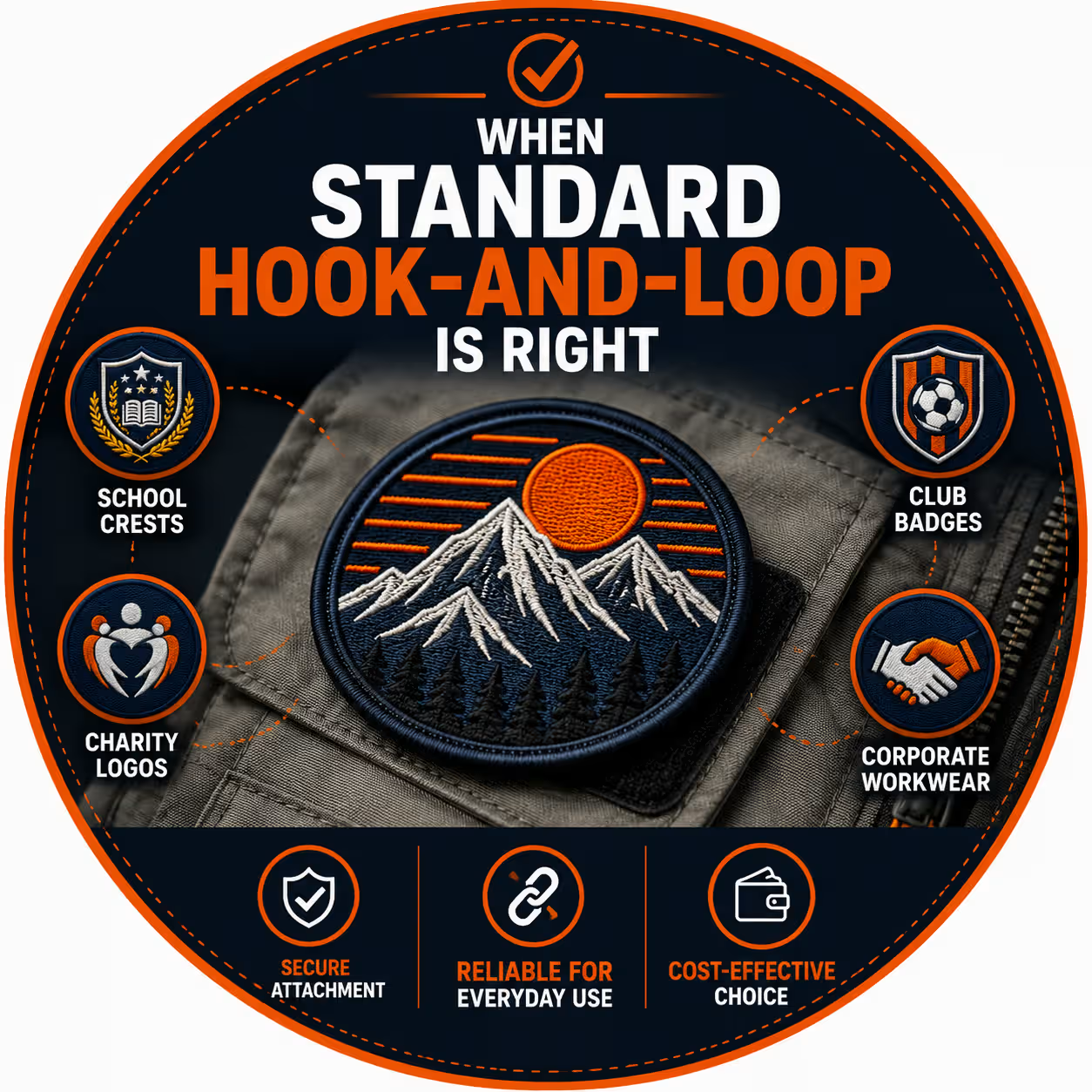
Standard hook-and-loop is right for the majority of custom patches, including club badges, school crests, charity logos, and corporate workwear. These patches attach occasionally rather than daily, so they never test the limits of the backing. A standard hook-and-loop backing holds a logo patch securely on a jacket, a bag, or a uniform without adding cost. For embroidered, woven, or printed designs in these settings, standard backing is the practical and economical choice, explore the full range on our embroidered patches page.
When Branded or High-Cycle Hook-and-Loop Matters
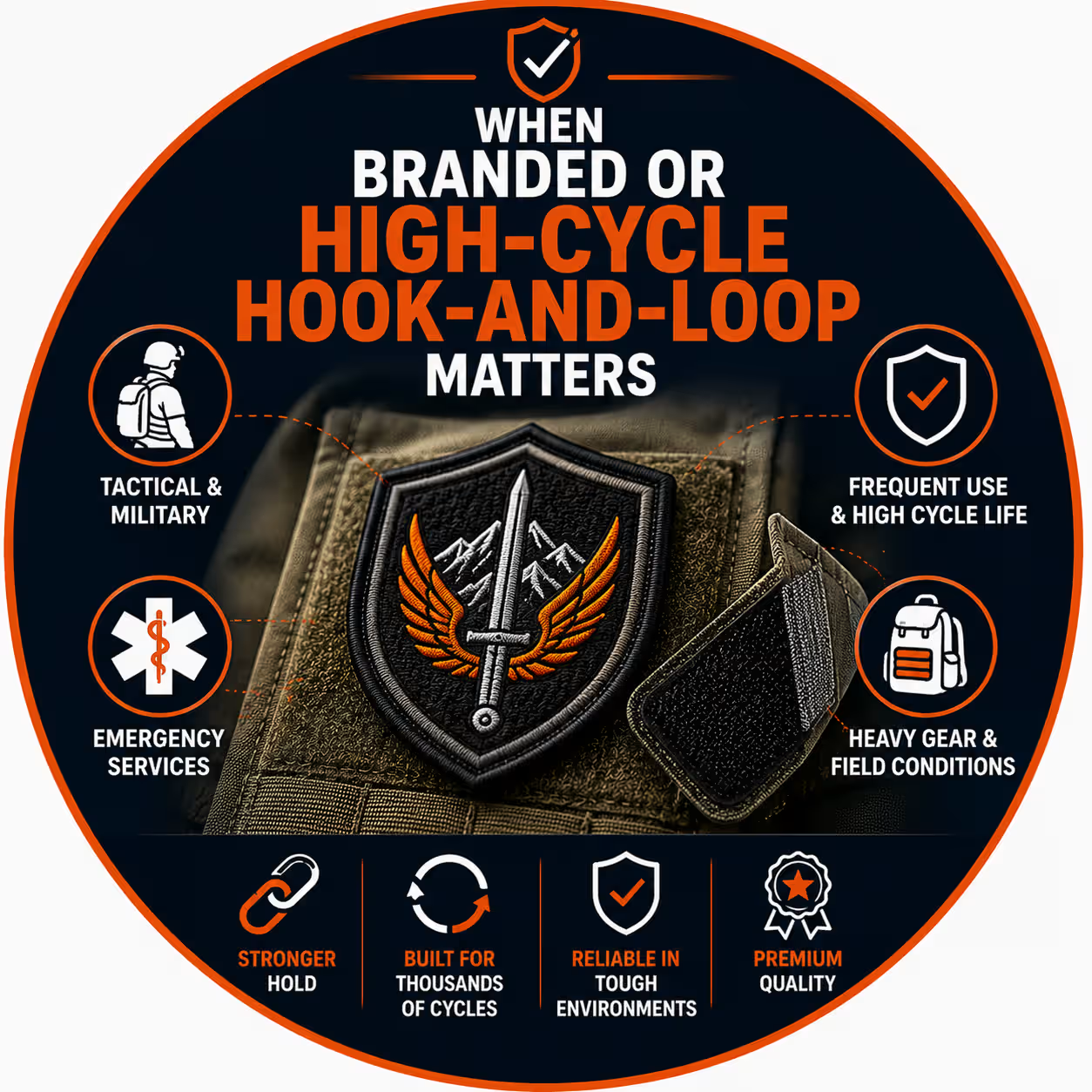
High-cycle hook-and-loop matters most for tactical, military, and emergency-services patches that are attached and removed frequently. These patches face daily handling, friction, and exposure, so the backing must resist wear over thousands of cycles. Frequent use calls for high-cycle hook-and-loop to ensure longevity, and heavy gear or military packs need heavy-duty hook-and-loop. Operators who swap morale patches, rank slides, and identification badges daily benefit from a tougher backing grade. For specialist applications, see our morale and tactical patches and military and cadet patches pages. FieldTex Cases
How to Order Custom Hook-and-Loop Patches in the UK
Ordering custom hook-and-loop patches in the UK follows five clear steps from artwork to delivery. The process is the same whether you choose embroidered, PVC, woven, or printed patches, and the hook-and-loop backing is added during finishing.
Choose your patch type.
Select embroidered, PVC, woven, or printed to suit your design and durability needs.
Upload your artwork.
Send a logo, badge, or design file, which our team digitises into a production-ready format.
Select hook-and-loop backing.
Pick the hook side, the loop side, or both, and choose single or double backing to match your kit.
Approve your digital proof.
Review a digital proof of size, colour, and layout before production begins.
Receive UK delivery.
Your finished patches are produced and dispatched with tracked UK delivery.
For full guidance on artwork files, proofing, and turnaround, visit our how to order page, or get a free quote for custom hook-and-loop patches to start your order today.
Our Customer Reviews
Frequently Asked Questions
Are Velcro patches the same as VELCRO® Brand fasteners?
Is "Velcro" a brand name?
Can custom patches use genuine VELCRO® Brand backing?
Does the type of hook-and-loop affect patch durability?
Do Velcro patches stick to any uniform?
Is hook-and-loop backing removable?
Summary
The difference between a Velcro patch and a VELCRO® Brand fastener comes down to language, not mechanics. Both rely on the same two-sided hook-and-loop system, yet one describes a custom patch finished with that backing and the other names a trademarked product from a single company. For nearly every UK order, club, school, corporate, or charity, standard hook-and-loop gives you the secure, reusable hold you expect at a sensible price. Reserve premium high-cycle backing for the demanding tactical and military patches that earn it. Once you know the backing grade you need, ordering bespoke hook-and-loop patches in the UK is a simple, five-step path from design to your door.