Are Velcro Patches
Better Than Iron-On?
Velcro patches are better than iron-on patches for reusable, frequently-washed and uniform applications, while iron-on patches are better for permanent, low-cost decoration on smooth cotton. The right backing depends on three factors: how often you need to remove the patch, the fabric you are attaching it to, and how often the garment is washed. This guide compares Velcro (hook-and-loop) patches and iron-on patches across durability, reusability and cost, so you can choose the correct custom patch backing for your UK project.
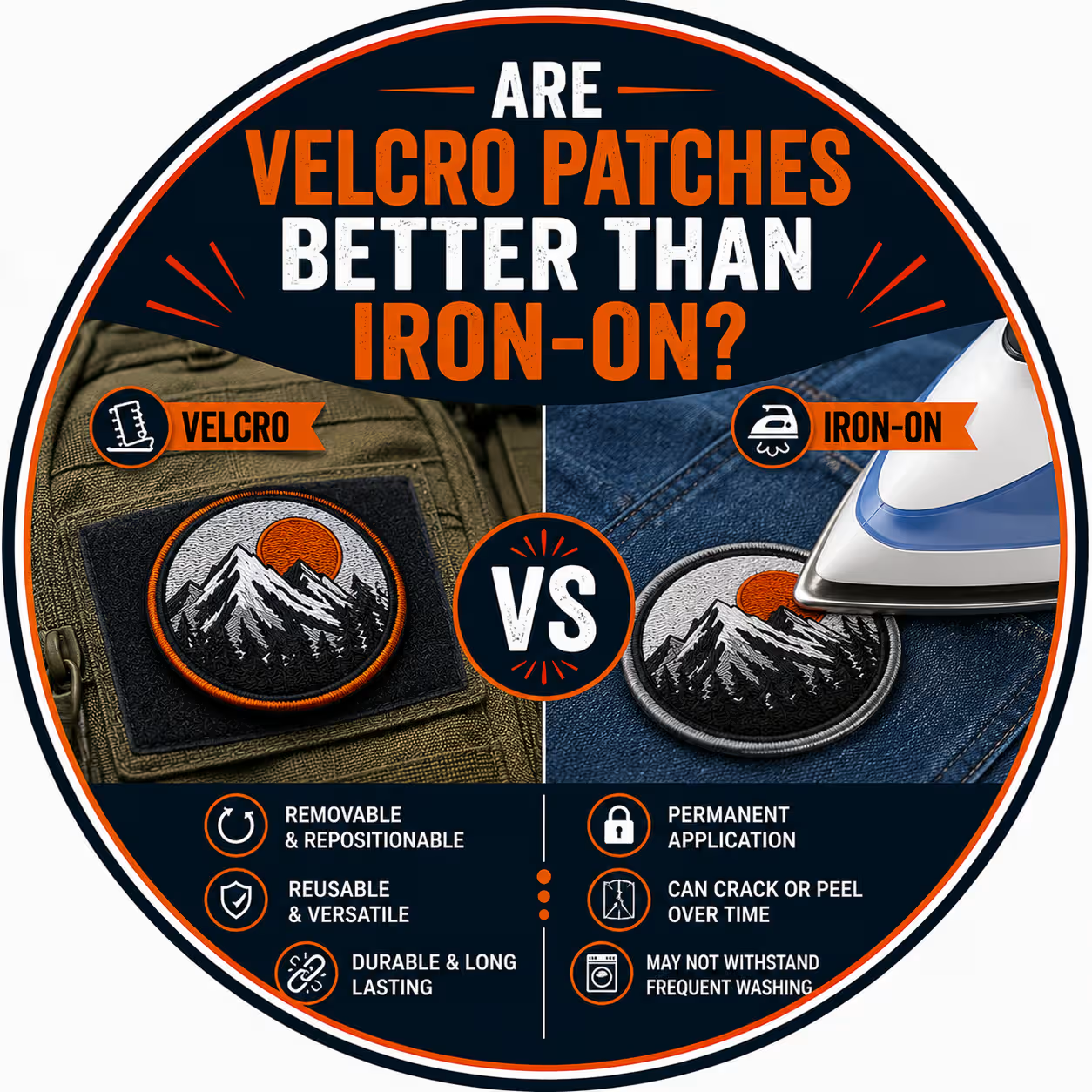
Are Velcro Patches Better Than Iron-On? The Short Answer
Velcro patches win when the patch must be removed, swapped or reused, which makes them the standard backing for uniforms, military kit, workwear and tactical gear. Iron-on patches win when the patch stays in one place permanently, the fabric is smooth cotton, and cost is the priority. Neither backing is universally superior; each backing type suits a different purpose.
| Choose Velcro when… | Choose iron-on when… |
|---|---|
| You need to remove or swap the patch | The patch stays in one place permanently |
| The garment is washed often | The fabric is smooth cotton or denim |
| The patch is shared across staff or uniforms | You want the lowest cost per patch |
| You wear tactical, military or workwear gear | You are decorating a casual jacket or bag |
A Velcro patch attaches through pressure and detaches in seconds. An iron-on patch bonds with heat and stays fixed. This single difference, removable versus permanent, decides most orders.
Velcro Patches vs Iron-On Patches: Side-by-Side Comparison
Velcro patches and iron-on patches differ across nine practical attributes. The table below sets out each attribute so you can match the backing to your use case before you order custom patches.
| Attribute | Velcro Patches | Iron-On Patches |
|---|---|---|
| Attachment method | Hook-and-loop, secured by pressure | Heat-activated adhesive, bonded by an iron |
| Removable | Yes, detaches in seconds | No, semi-permanent once applied |
| Reusable | Yes, swap freely between garments | No, single placement |
| Best fabrics | Most fabrics, including nylon and polyester | Smooth cotton and denim |
| Washing | Remove before laundering, then reattach | Survives limited wash cycles before peeling |
| Durability | High – withstands repeated removal | Moderate – adhesive weakens over time |
| Typical cost | Backing adds a small cost per patch | Backing is usually included |
| Best applications | Uniforms, military, workwear, tactical, morale | Casual wear, bags, hats, one-off decoration |
| Application location | At home, on a loop panel or hook-receptive garment | At home with a household iron |
The comparison shows a clear pattern. Velcro patches trade a small extra cost for flexibility and a long lifespan. Iron-on patches trade flexibility for a lower price and a clean, permanent finish.
What Are Velcro Patches?
Velcro patches are custom patches backed with a hook-and-loop fastening system that attaches and detaches through pressure. The term “Velcro” is a trademarked brand name for hook-and-loop fastener, and the two terms describe the same backing. Each Velcro patch carries the hook side on the patch, while the loop side sits on the garment, vest or panel. This pairing lets you press the patch into place, peel it off, and reposition it without tools, heat or stitching.
Velcro patches suit any situation that demands a removable badge. Most embroidered patches, PVC patches and woven patches can be ordered with hook-and-loop backing, which makes the format compatible with nearly every custom patch type.
How Hook-and-Loop Backing Works
Hook-and-loop backing works through two interlocking surfaces: a stiff hook side and a soft loop side. The hook side grips the loop side on contact and holds firm under tension. You press the two surfaces together to fasten the patch and pull them apart to release it. Because nylon and polyester form the hooks and loops, the fastener withstands thousands of cycles before the grip weakens.
The hook side normally bonds to the back of the patch during manufacture. The loop side attaches to the garment, either sewn directly onto the fabric or supplied as a separate loop panel. This factory-applied backing produces a far stronger hold than hook material added by hand after purchase.
Where Velcro Patches Are Used in the UK
Velcro patches serve UK organisations that swap, update or remove identification regularly. British military and cadet units use hook-and-loop patches for unit insignia, name tapes and flags, because personnel remove patches before laundering and change them when reassigned. Police and security services use Velcro patches on tactical vests so officers switch identifiers quickly. Workwear teams use them on shared uniforms, where one garment passes between staff across shifts.
Morale and tactical communities also favour Velcro patches, since wearers rotate designs to suit the day or the task. This demand for quick changes explains why hook-and-loop backing dominates uniform and tactical orders across the UK.
What Are Iron-On Patches?
Iron-on patches are custom patches backed with a heat-activated adhesive that bonds permanently to fabric under the heat of a household iron. The adhesive layer melts when heated, flows into the weave of the fabric, and sets as it cools to form a fixed bond. An iron-on patch stays in one place once applied, which gives a clean, flush finish with no fastener bulk.
Iron-on patches apply quickly and need no sewing skill. You position the patch, cover it with a cloth, and press with a hot iron for the recommended time. This simplicity makes iron-on backing popular for casual jackets, bags, hats and personal projects.
How Heat-Activated Adhesive Works
Heat-activated adhesive works by melting a glue layer pressed against the fabric. The iron supplies enough heat to soften the adhesive, the pressure pushes it into the fibres, and the cooling stage hardens the bond. A firm press across the whole patch produces an even, lasting hold.
The bond depends on a flat, clean surface. Dust, lint or an uneven texture weakens the adhesive and shortens the patch’s life. For this reason, iron-on patches perform best on tightly woven cotton rather than on rough, stretchy or textured materials.
Which Fabrics Iron-On Patches Suit Best
Iron-on patches suit smooth, heat-tolerant fabrics that hold a strong adhesive bond. Cotton and denim accept iron-on backing best, because the tight weave grips the melted adhesive and the fibres tolerate the iron’s heat. Polyester blends accept iron-on patches with care, since high heat can scorch synthetic fibres.
Iron-on patches do not suit waterproof fabrics, leather, nylon shells or delicate materials. These surfaces either repel the adhesive or melt under the iron, so a sew-on or Velcro backing serves them better. Matching the backing to the fabric is the single most important step before you order.
Durability – Which Backing Lasts Longer?
Velcro patches last longer than iron-on patches because hook-and-loop backing survives repeated removal and washing, while iron-on adhesive degrades with each wash cycle. A Velcro patch detaches before laundering, so the patch and the garment wear independently and neither stresses the other. An iron-on patch stays attached through every wash, and the heat, water and detergent slowly break down the adhesive bond.
Iron-on patches typically survive a limited number of wash cycles before the edges lift and the corners peel. Hook-and-loop fasteners, by contrast, hold their grip across thousands of attach-and-detach cycles. The hook side and loop side eventually flatten with heavy use, but a worn loop panel is cheap to replace, whereas a peeled iron-on patch is difficult to reapply cleanly. For any garment washed often, Velcro backing protects both the patch and your investment.
Durability also depends on the patch material beneath the backing. Embroidered patches, PVC patches and woven patches all carry hook-and-loop backing well, which means the durable backing pairs with a durable patch face. This combination explains why uniform and tactical buyers treat Velcro patches as the long-life option.
- Sew-on lifespan: unlimited wash cycles | 5–10+ years daily wear
- Velcro lifespan: hook wears slowly | patch itself lasts indefinitely | loop side replaceable
- Iron-on lifespan: 20–50 wash cycles | adhesive weakens with heat and washing
Reusability and Repositioning
Velcro patches are reusable, while iron-on patches are not. A Velcro patch peels off one garment and presses onto another in seconds, so a single patch moves freely between a jacket, a vest, a bag or a uniform. This repositioning needs no heat, no glue and no stitching, which makes hook-and-loop backing the practical choice for anyone who changes patches regularly.
Iron-on patches fix in a single position once the adhesive sets. Removing an iron-on patch usually damages the adhesive, the patch edge or the fabric beneath, and reapplying it rarely produces a clean bond. An iron-on patch therefore commits you to one placement on one garment from the moment you press it.
This contrast decides many orders. Collectors, hobbyists, scouts and event organisers choose Velcro patches to swap designs at will. Buyers who want one logo fixed permanently to one item choose iron-on backing for its clean, flush finish. Reusability, not appearance, separates the two formats most clearly.
Cost and Minimum Order – Velcro vs Iron-On in the UK
Iron-on patches usually cost less than Velcro patches, because most UK suppliers include iron-on backing in the base price while hook-and-loop backing adds a small charge per patch. The extra cost covers the hook material bonded to the patch and, where supplied, the matching loop panel. For a large order, this per-unit difference adds up, so the backing choice carries a real budget impact.
The minimum order quantity (MOQ) for custom patches typically starts around 10 to 50 pieces in the UK, and the same MOQ applies to both backing types. Turnaround times also stay similar, with standard production running about 10 to 14 days and express options available for urgent orders. Prices are quoted in £ and include UK VAT where applicable, and tracked delivery via Royal Mail or DPD covers most mainland orders. Military and cadet customers can request delivery to a BFPO address.
The cost gap should not decide the order on its own. A Velcro patch that lasts for years across multiple garments often delivers better value than a cheaper iron-on patch that peels after repeated washing. You can review full backing prices and order minimums on the Velcro backing pricing and minimum order page before you commit. Value, measured across the lifespan of the patch, usually favours hook-and-loop backing for frequent-use applications.
When to Choose Velcro Over Iron-On
Velcro patches are the better choice whenever a patch must be removed, swapped, shared or worn on demanding gear. The three use cases below cover the most common reasons UK buyers select hook-and-loop backing over iron-on backing.
Uniforms, Military and BFPO Orders
Velcro patches suit uniforms because personnel must remove patches before laundering and change them when roles or postings change. British military and cadet units rely on hook-and-loop backing for unit insignia, name tapes and rank patches, since soldiers strip patches off before high-temperature washing and reattach them afterwards. A uniform with loop panels accepts a fresh patch in seconds, with no iron and no sewing.
BFPO orders extend this convenience to forces serving overseas. A Velcro-backed patch ships easily, attaches without equipment, and updates as duties change. You can explore the full range of Velcro patches for military and cadet uniforms to match insignia to regulation requirements.
Tactical and Morale Patches
Velcro patches dominate tactical and morale use because wearers rotate designs to suit the task, the team or the day. A tactical vest or plate carrier fitted with loop panels holds a patch firmly during activity, yet releases it instantly for a change. This flexibility lets a wearer switch between subdued and full-colour identifiers, or display a different morale patch whenever they choose.
Iron-on backing cannot serve this purpose, since a fixed adhesive bond removes the ability to swap. Hook-and-loop backing is therefore the only practical format for tactical and morale patches that change regularly.
Workwear Shared Between Staff
Velcro patches solve a specific workwear problem: one garment worn by several staff across different shifts. A shared jacket or hi-vis vest fitted with a loop panel accepts each worker’s name or role patch in turn, so the same garment serves multiple people without permanent branding. The patch transfers in seconds at a shift change, and the garment stays neutral between uses.
Iron-on patches fix one name to one garment permanently, which defeats the purpose of shared workwear. For any uniform pool that circulates between staff, hook-and-loop backing is the more economical and practical option over the life of the kit.
When Iron-On Is the Better Choice
Iron-on patches are the better choice when a patch stays in one place permanently, the fabric is smooth cotton, and cost is the deciding factor. A casual denim jacket, a tote bag, a cap or a personal craft project all suit iron-on backing, because the patch never needs to move and the flush finish looks clean with no fastener bulk beneath it.
Iron-on patches also win on speed and price for one-off decoration. The backing comes included, the application needs only a household iron, and a single patch on a single garment carries no requirement for reusability. For decorative, permanent, budget-conscious projects on heat-tolerant cotton or denim, iron-on backing is the sensible pick.
Honesty matters here: a site that sells Velcro patches will still recommend iron-on backing when it genuinely fits the job better. Matching the backing to the use case, not to the sale, produces a patch that performs as the customer expects.
Can You Use Both? Velcro-Backed Patches Explained
You can combine the benefits of both backings by ordering a Velcro patch and mounting it on an iron-on loop panel. The patch itself carries hook-and-loop backing, so it stays removable and reusable. The loop panel attaches to the garment with an iron, so you fix the receiving surface once and then swap patches freely above it. This setup gives you the permanence of iron-on at the base and the flexibility of Velcro on top.
A single patch cannot carry two backings at once, since each patch ships with one backing type. The practical workaround is the two-part system: an iron-on loop base bonded to the garment, plus a hook-backed patch that presses onto it. This method suits anyone who wants a fixed mounting point but still needs to change the patch over time. You can follow the steps to fit either format on the how to attach a hook-and-loop patch page before you order.
Our Customer Reviews
Frequently Asked Questions
Are Velcro patches better than iron-on for uniforms?
Do Velcro patches last longer than iron-on patches?
Can you iron a patch onto Velcro?
Are iron-on patches cheaper than Velcro patches?
Can a patch have both Velcro and iron-on backing?
How do I wash a garment with a Velcro patch?
Summary – Velcro vs Iron-On at a Glance
The verdict comes down to one question: does the patch need to move? Velcro patches answer “yes”, they detach, reposition and reuse across garments, survive years of laundering, and serve uniforms, military kit, tactical gear and shared workwear without compromise. Iron-on patches answer “no”, they bond once, sit flush and cost less, which makes them ideal for casual, permanent decoration on smooth cotton and denim.
For the reusable, frequently-washed and uniform applications that define most professional use in the UK, hook-and-loop backing is the stronger long-term choice. For a one-off logo fixed permanently to a single item at the lowest price, iron-on backing does the job well. Choosing the backing that matches your real use case, rather than the cheapest or the most familiar, gives you a patch that performs exactly as you expect.
Still unsure which backing fits your project? Compare every attachment method side by side on the which patch backing to choose for your project page, then get a free quote for custom Velcro patches with backing, sizing and UK delivery confirmed before you order.