
How Hook-and-Loop Backing Works
Hook-and-loop backing is a two-part fastening system that grips when a stiff hook side presses against a soft loop side. This backing holds a custom patch firmly on a garment, yet peels away cleanly so you can remove, reposition, or swap the patch whenever you need. Across the UK, military units, tactical operators, workwear brands, and MC clubs choose hook-and-loop backing for exactly this reason: the patch stays secure on duty, then lifts off for washing or rotation without damage.
What Is Hook-and-Loop Backing?
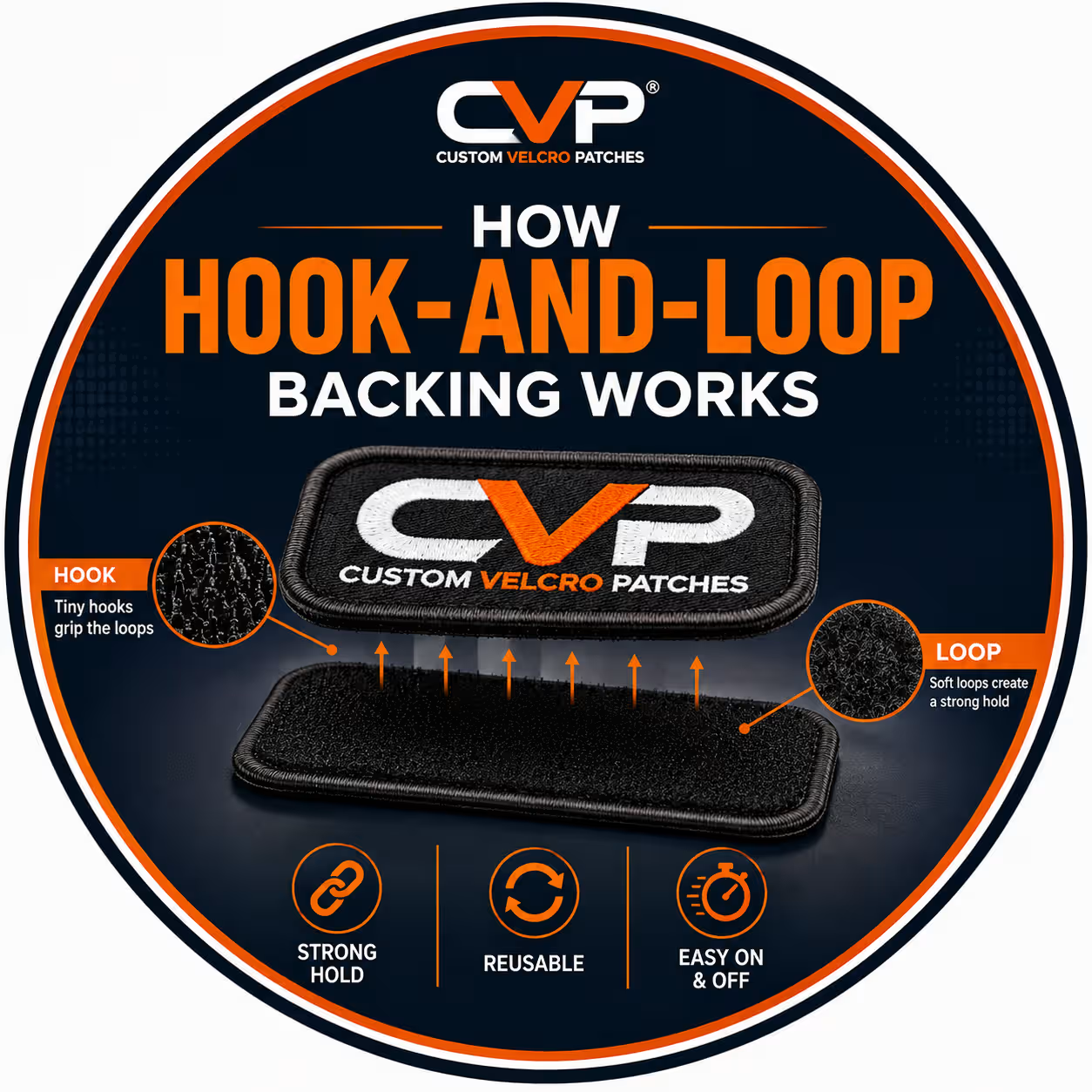
Hook-and-loop backing is a fastening method that joins two textile surfaces, a hook tape and a loop tape, into a single, releasable bond. The hook tape carries thousands of tiny rigid hooks. The loop tape carries a dense field of soft, springy loops. When the two faces meet, the hooks catch the loops and lock together, creating a hold strong enough for a patch yet gentle enough to separate by hand.
Manufacturers attach the loop side to the back of the patch and fix the hook side to the garment, vest, or plate carrier. This arrangement turns any custom patch, embroidered, PVC, woven, or printed, into a removable, repositionable badge. The bond is mechanical, not adhesive, so it survives repeated use, resists heat, and does not leave residue.
Hook-and-Loop vs Velcro – the Terminology
Hook-and-loop is the generic, correct term for this backing. Velcro is a registered brand name owned by Velcro Companies, not a product category. People commonly say “Velcro patch” the way they say “Sellotape” or “Hoover”, but the material itself is hook-and-loop fastener. We use the generic term throughout because it describes the mechanism accurately and because not every hook-and-loop tape is genuine Velcro-brand product. If you want the full background on the trademark, read our guide on why Velcro is a trademark and hook-and-loop is the generic term.
How Hook-and-Loop Backing Works (The Mechanism)
Hook-and-loop backing works through mechanical engagement: the hooks bend into the loops, grip them, and resist separation under everyday load. The system relies on three things, the hook side, the loop side, and the way force is applied when you try to pull them apart. Understanding each part explains why a hook-and-loop patch stays put when worn but releases the moment you peel it off.
The Hook Side – Stiff Nylon Hooks
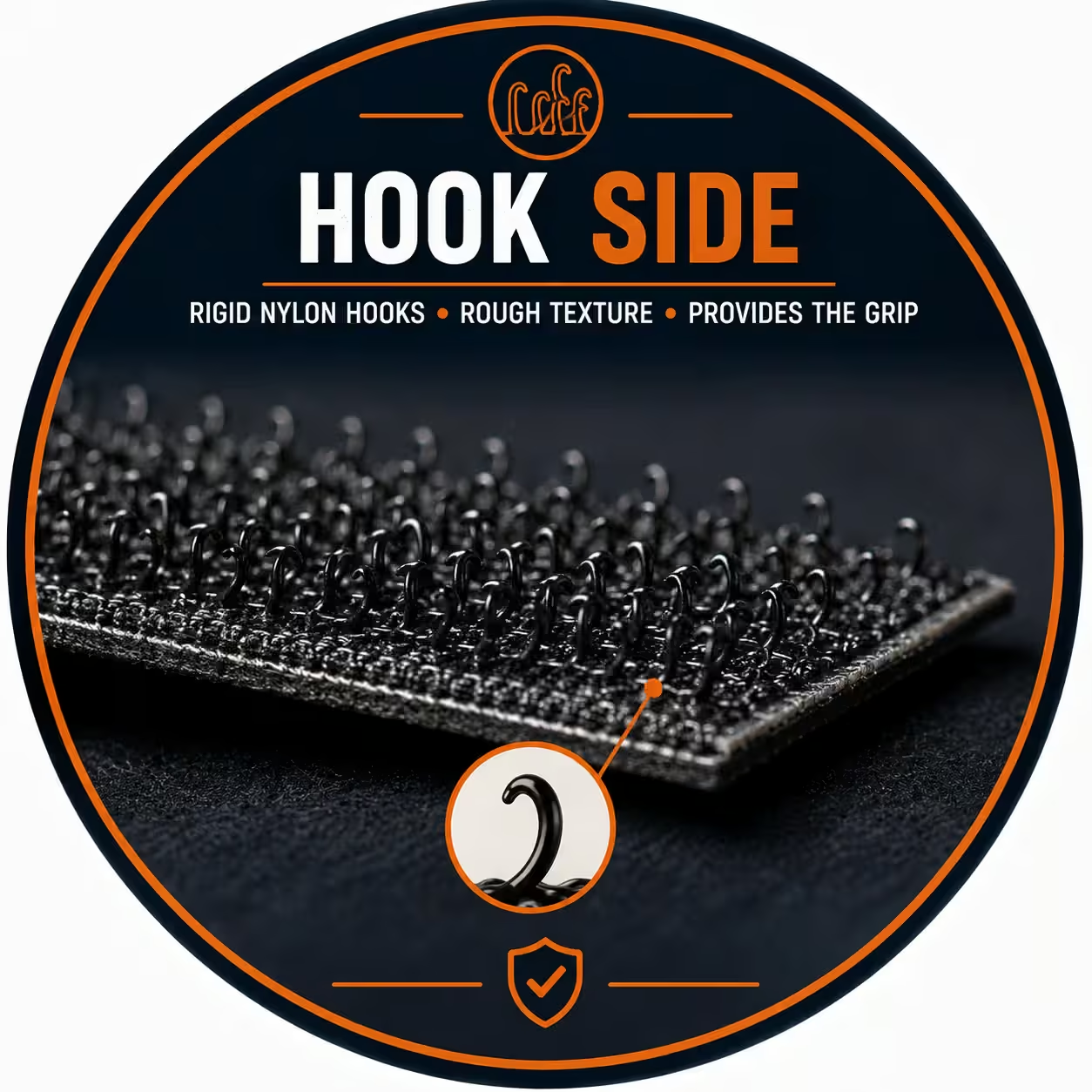
The hook side is a strip of stiff, moulded nylon covered in hundreds of small, curved hooks per square centimetre. Each hook holds its shape under pressure and springs back after release, which is what lets the tape work thousands of times without wearing out. Nylon hooks are firmer than the loops they grip, so the hook tape feels rough and scratchy to the touch. On a custom patch setup, the hook side normally goes on the garment, the jacket, cap, bag, or tactical panel, because the abrasive surface is better suited to a fixed base than to direct skin contact.
The Loop Side – Soft Fuzzy Loops
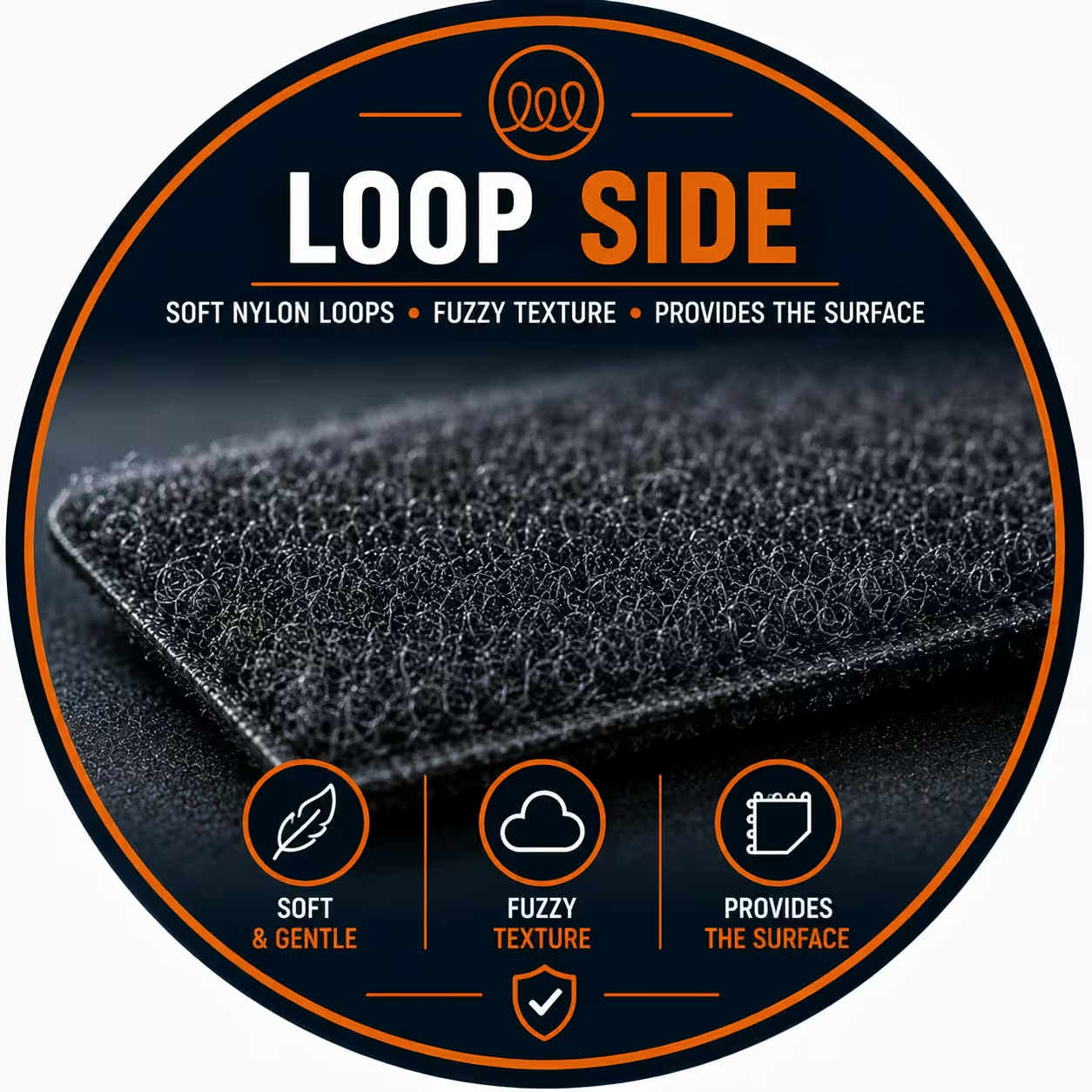
The loop side is a soft, brushed tape woven from fine nylon or polyester yarns that form a dense field of tiny upright loops. The loops flex freely in every direction, so they accept the hooks from any approach angle and at any rotation. This softness is why the loop side feels fuzzy and comfortable, and why it sits against clothing without snagging it. On a custom patch, the loop side is sewn or heat-sealed to the back of the patch, giving the badge a smooth, finished reverse that grips the hook tape on contact.
How the Two Sides Grip (Peel vs Shear Force)
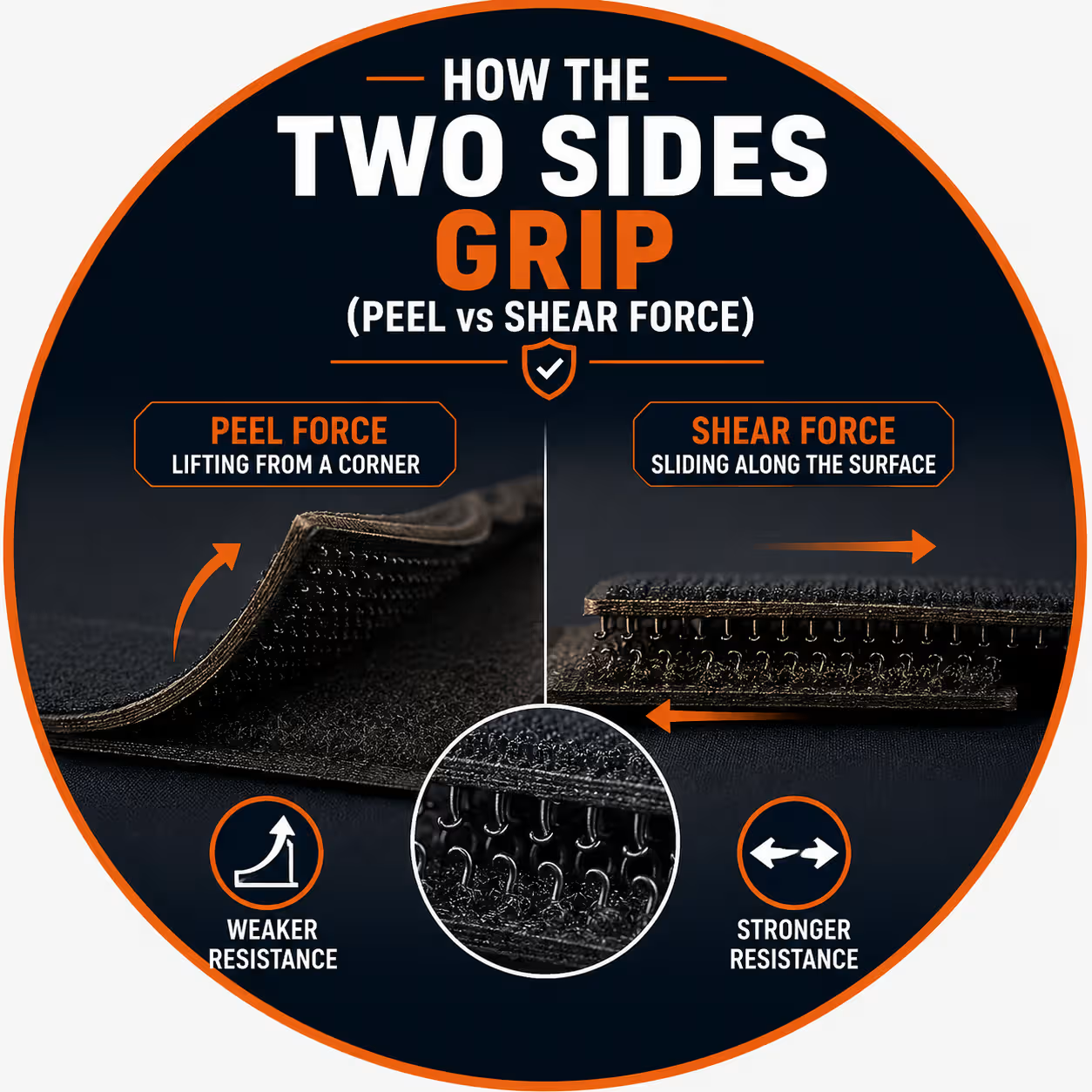
The two sides grip the instant you press them together, because the hooks splay the loops apart and then snap closed around them. The strength of that grip depends on the direction of pull. Shear force, sliding pressure along the surface, like a patch hanging on an upright vest, meets strong resistance, because every hook shares the load at once. Peel force, lifting from one corner, meets weak resistance, because the hooks release in sequence, one row at a time. This difference is the whole point of hook-and-loop backing: it holds firmly through shear during wear, yet peels open easily when you lift a corner to remove the patch.
How Hook-and-Loop Backing Is Applied to a Patch
Hook-and-loop backing is applied to a patch after the patch face is finished, never before. The manufacturer first produces the embroidered, woven, PVC, or printed front, then bonds the loop tape to the reverse as a separate stage. This sequence keeps the patch face crisp and the backing flat, so the finished badge sits clean against any hook-side surface. The process follows four clear steps.
Finish the patch face.
The patch is digitised, stitched or moulded, and trimmed to its final shape with a merrow border or laser-cut edge.
Cut the loop tape to shape.
A loop panel is cut to match the patch outline, so no fastener overhangs the edge.
Fix the loop tape to the back.
The loop side is attached to the reverse of the patch by sewing or by heat-seal bonding.
Pair with the hook side.
The hook tape is supplied separately and fixed to the garment, vest, cap, or plate carrier where the patch will sit.
The result is a custom patch that mounts in seconds, holds during wear, and lifts off on demand. Two backing methods dominate UK production, and each suits a different use case.
Sew-On Loop Backing
Sew-on loop backing attaches the loop tape to the patch with stitching around the perimeter. The stitched edge locks the backing permanently to the patch body, so the loop side never peels away from the badge even under heavy field use. Sew-on loop is the strongest, most durable backing method, which is why military, cadet, and tactical patches almost always use it. The trade-off is a visible stitch line on the patch face, though a matched thread keeps it discreet.
Heat-Seal (Iron-On) Loop Backing
Heat-seal loop backing bonds the loop tape to the patch with a thin layer of heat-activated adhesive instead of stitching. A heat press fuses the loop side to the reverse, producing a clean back with no visible stitch line. Heat-seal backing is faster to produce and gives a smoother finish, which suits corporate, promotional, and event patches. It holds well for everyday wear, but sew-on loop remains the better choice for patches that face extreme pull or repeated washing. Once the loop side is bonded, you simply press the patch onto its hook tape, see our full guide on how to attach a hook-and-loop patch.
Which Side Goes Where? (Patch vs Garment)
The loop side goes on the patch, and the hook side goes on the garment. This is the standard convention across UK patch manufacturing, and there are two practical reasons for it. First, the loop tape is soft, so a patch backed with loop feels comfortable and never scratches the wearer or snags nearby fabric. Second, the hook tape is rough and hard-wearing, which makes it better suited to a fixed garment panel that stays in place. A jacket, vest, or cap fitted with hook tape becomes a permanent mounting point, ready to receive any loop-backed patch you press onto it.
Keeping this convention consistent across a kit matters. When every patch carries loop and every garment carries hook, any patch fits any position, a single set of morale or rank patches moves freely between jackets, bags, and plate carriers. For the full breakdown of grip, comfort, and placement, read our guide on the hook side versus the loop side.
Single vs Double Hook-and-Loop Backing
Hook-and-loop backing comes in two configurations: single backing and double backing. Single backing supplies the loop side on the patch only, and assumes the wearer already has hook tape fitted to the garment. Double backing supplies both pieces together, the loop tape bonded to the patch and a matching hook tape ready to fix to the garment. The right choice depends on whether your kit is already set up for hook-and-loop.
| Attribute | Single Backing | Double Backing |
|---|---|---|
| What you receive | Loop side on the patch only | Loop on patch + separate hook tape |
| Best for | Garments already fitted with hook tape | New setups with no hook tape yet |
| Cost | Lower | Slightly higher (extra tape) |
| Common use | Military and tactical kit | First-time orders, gifts, civilian use |
| Setup needed | None – patch is ready to mount | Fix the hook side to the garment first |
Most military and emergency-services buyers order single backing, because their uniforms and carriers already carry hook tape as standard. First-time and civilian buyers usually need double backing, since they have no hook side fitted yet. For a full comparison of when each option makes sense, see our guide on single versus double hook-and-loop backing.
Why Choose Hook-and-Loop Backing for Custom Patches
Hook-and-loop backing makes a custom patch removable, repositionable, and reusable, which fixed backings cannot match. The loop-backed patch mounts in seconds, holds firmly through a full shift or operation, then peels off for washing, storage, or rotation. This flexibility is why hook-and-loop backing dominates sectors where kit changes often and uniforms must stay clean and adaptable. The main benefits follow directly from the mechanism.
- Removable and swappable – change rank, name, flag, or morale patches in seconds without tools, heat, or sewing.
- Reusable thousands of times – the nylon hooks spring back after each release, so the bond lasts the life of the garment.
- Wash-friendly – lift the patch off before laundering the garment, which protects both the patch face and the fabric.
- No permanent marks – the mechanical bond leaves no adhesive residue and no stitch holes in the garment.
- One garment, many patches – a single hook panel accepts any loop-backed badge, so one vest displays a whole rotation.
These advantages suit specific UK use cases. Military and cadet units swap rank and unit patches between uniforms. Tactical and morale users rotate patches on plate carriers daily. Workwear brands move department or name patches between shared garments. In each case, hook-and-loop backing turns a static badge into a flexible, long-lived part of the kit.
Hook-and-Loop vs Iron-On vs Sew-On Backing
Hook-and-loop, iron-on, and sew-on are the three main backing types for custom patches, and each fixes the patch in a different way. Hook-and-loop backing is removable, iron-on backing is semi-permanent, and sew-on backing is permanent. The right backing depends on how often you need to move the patch and how strong the hold must be.
| Attribute | Hook-and-Loop | Iron-On | Sew-On |
|---|---|---|---|
| Attachment | Hooks grip loops | Heat-activated adhesive | Stitched thread |
| Removable | Yes. in seconds | No, adhesive bonds it | No, permanent |
| Reusable | Yes, thousands of times | No | No |
| Hold strength | Strong (shear), easy peel | Medium | Strongest |
| Application | Press onto hook tape | Household or press iron | Hand or machine sewing |
| Washable | Yes (remove first) | Yes, with care | Yes |
| Best for | Military, tactical, morale | Casual, fashion, quick fixes | Workwear, permanent badges |
Hook-and-loop backing wins when the patch must come off and go back on repeatedly. Iron-on backing suits a quick, low-cost fix that stays put. Sew-on backing wins when the patch must never move. For the full side-by-side breakdown, read our guide comparing Velcro, iron-on, and sew-on backing.
Caring for Hook-and-Loop Patches
Hook-and-loop patches last for years when you care for the backing as well as the patch face. The loops and hooks both degrade if they clog with lint, so a few simple habits keep the grip strong. Always remove the patch from the garment before washing, then press the hook and loop sides together to seal out fibres during the wash. Keep loose hook tape closed when not in use, and pick out any trapped lint with a fine comb or stiff brush. These steps protect the mechanical bond and keep the patch gripping like new. For the complete routine, see our guide on washing and caring for hook-and-loop patches.
Our Customer Reviews
Frequently Asked Questions
Is hook-and-loop backing the same as Velcro?
Does the patch hold the hook side or the loop side?
Can hook-and-loop patches be removed and reused?
Is hook-and-loop backing machine washable?
Which backing is strongest – hook-and-loop or sew-on?
Summary
Hook-and-loop backing turns a custom patch into a removable, reusable badge by pairing a stiff hook tape on the garment with a soft loop tape on the patch. The hooks catch the loops the moment the two surfaces meet, holding firmly under shear during wear and releasing cleanly when you peel a corner. Manufacturers bond the loop side to the patch by sewing or heat-sealing, then supply the hook side for the garment, in either single or double backing. Compared with permanent iron-on and sew-on backings, hook-and-loop trades a little ultimate hold for the freedom to swap, wash, and rotate patches, which is exactly why UK military, tactical, and workwear users rely on it.